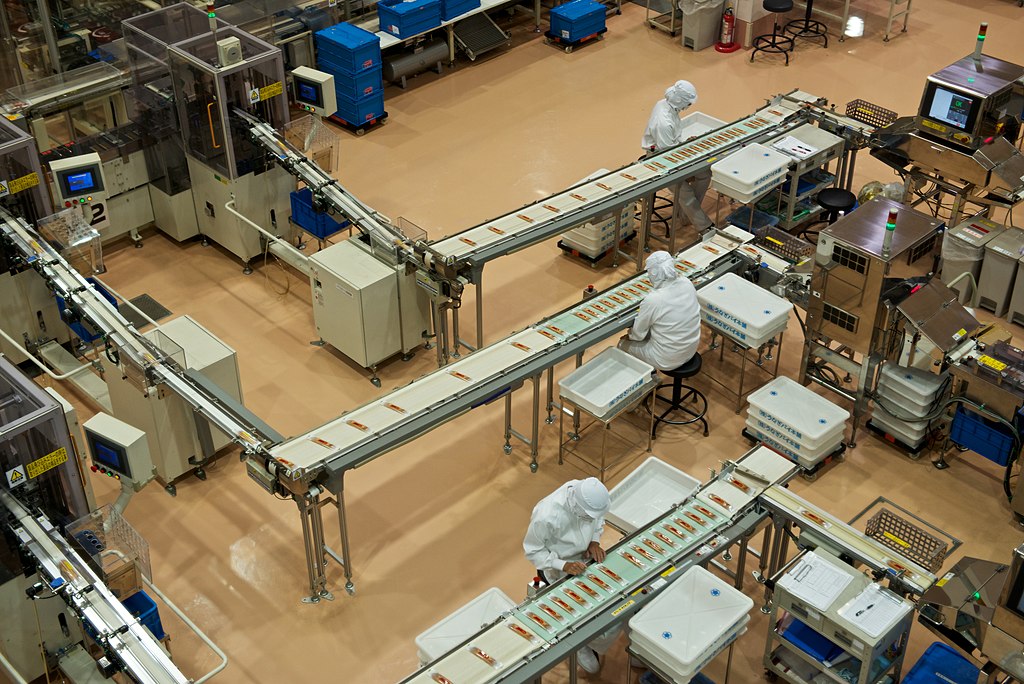
Japan’s manufacturing sector expanded at its fastest pace in nearly four years in February, signaling renewed strength in the world’s third-largest economy and supporting Prime Minister Sanae Takaichi’s economic revival agenda. According to the S&P Global flash Japan Manufacturing Purchasing Managers’ Index (PMI), the headline figure rose to 52.8 from 51.5 in January. Any reading above 50 indicates expansion, highlighting sustained growth in factory activity.
The latest PMI data points to stronger domestic and overseas demand, helping drive improvements in both production and new orders. Businesses reported solid underlying market conditions and cited new product launches as a key factor behind higher output. Notably, new export orders grew at their fastest rate in eight years, underscoring robust global appetite for Japanese goods.
The services sector also remained resilient. The flash Japan Services PMI edged up to 53.8 in February from 53.7 in January, marking the strongest expansion since May 2024. As a result, the composite PMI, which combines manufacturing and services performance, climbed to 53.8 from 53.1, its highest level since May 2023. The data suggests Japan’s economic recovery is becoming broader and more balanced across sectors.
Stronger demand has given companies more pricing power despite rising input costs. Firms increased selling prices at the quickest pace since May 2024 as they faced mounting cost pressures. At the same time, business confidence improved significantly, reaching a 15-month high. Many companies expect continued momentum driven by demand for semiconductors and artificial intelligence-related technologies.
The upbeat survey results offer political and economic encouragement for Takaichi, whose Liberal Democratic Party secured a decisive election victory on February 8 with promises to revitalize growth and ease cost-of-living challenges. The latest Japan PMI data reinforces optimism that the country’s economic recovery is gaining traction in early 2026.