Japanese startup Iwaya Giken is launching a space tourism business to take sightseers on balloon rides 25 kilometers into the stratosphere
Iwaya Giken noted that while passengers need not undergo special training to make the trip but ticket prices would not be cheap, initially starting at around 24 million yen ($178,100) per person.
Company President Keisuke Iwaya said they will be able to reduce the price to the 1 million yen to 2 million yen range in the future.
Iwaya Giken may begin offering the service by the end of the year.
The service lets passengers ride on the balloon that would ascend for two hours, and stay in the stratosphere for an hour, letting them enjoy the view.
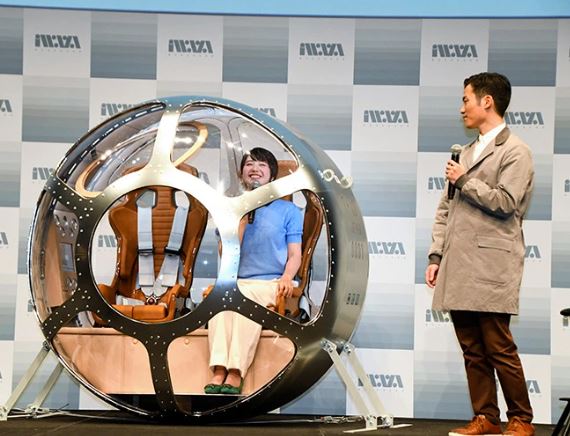
The cabin of the 41-meter-high balloon, which seats two people, is spherical and has a 1.5-meter diameter.
The balloon measures 41 meters high and has a spherical two-seater cabin, which is 1.5 meters in diameter.
The cabin was designed to be impervious to variations in air pressure and temperature. In the event of an emergency, it may be converted into a parachute and outfitted with life support systems.
Iwaya claimed that it created everything in-house to ensure safety, including its communication devices.
By the end of this year, the company hopes to hire five passengers and a pilot for the initial batch of flights, which it hopes to begin from Hokkaido.
It has conducted more than 300 flight tests, with the highest point reaching about 40 kilometers into the sky.
The firm is partnering with a major travel agency, JTB Corp., to organize the tours.
After analyzing the results of the experiments and test flights, JTB Corp. will determine whether it is ready to start selling package deals.