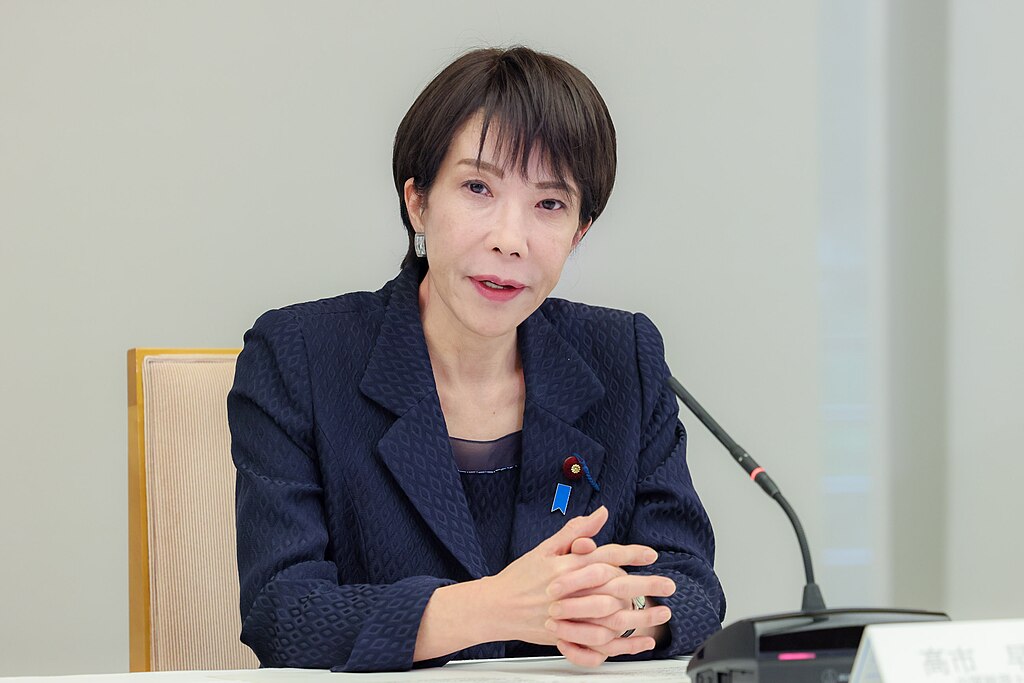
Japanese Prime Minister Sanae Takaichi has ignited a diplomatic dispute with China after suggesting that a potential Chinese military attack on Taiwan could trigger Japan’s defense response. Her comments mark a shift from Tokyo’s usual strategic ambiguity regarding Taiwan—an approach long aligned with the United States, Japan’s key security ally.
During a parliamentary session, Takaichi was questioned about “survival-threatening situations,” a legal term that allows Japan’s Self-Defense Forces to be deployed if the nation’s existence is at risk. She stated that if Beijing used military force or warships to seize Taiwan, it could fall under that category. She added that any Chinese attack on U.S. warshipsassisting Taiwan could compel Japan to take military action to defend itself and its ally.
The remarks quickly drew backlash from Beijing, which considers Taiwan a breakaway province and condemned Takaichi’s statement as interference in its internal affairs. A Chinese diplomat in Osaka further escalated tensions by posting an inflammatory comment on X (formerly Twitter), saying “the dirty head that sticks itself in must be cut off,” which Tokyo called “extremely inappropriate.” The post was later deleted.
The dispute underscores Japan’s delicate position amid rising tensions in the Indo-Pacific, where Taiwan lies just 110 km from Japanese territory. The waters surrounding Taiwan are vital trade routes crucial to Japan’s economy and energy supply.
Takaichi, known for her nationalist stance, has already strained relations with Beijing by publicly meeting a Taiwanese representative in Seoul earlier this month. In response to China’s formal protest, Japan’s government reaffirmed its adherence to the 1972 Japan-China agreement, while calling for peaceful dialogue over Taiwan.
Takaichi later clarified that her remarks were hypothetical and vowed to exercise more caution in future discussions.