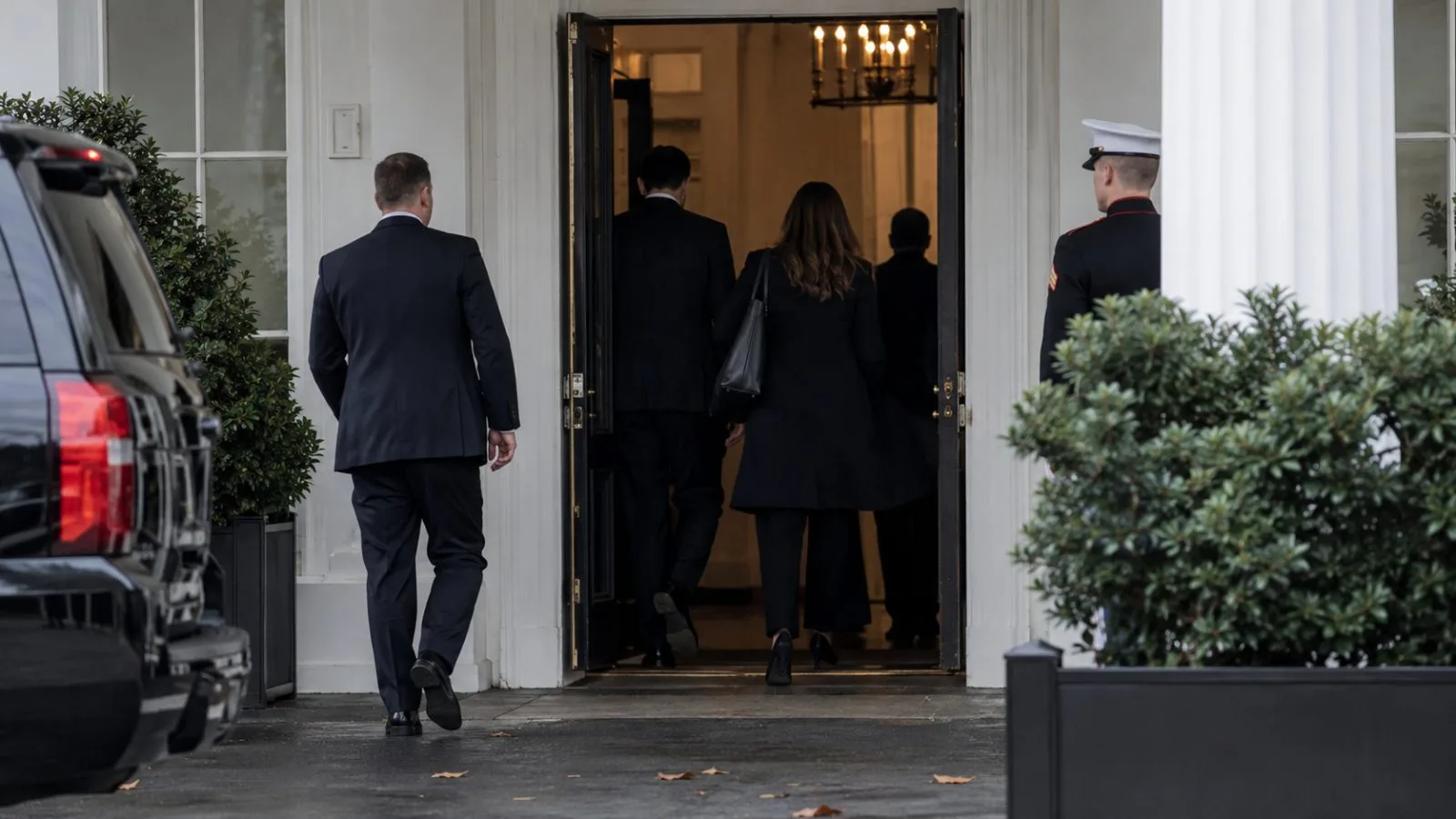
A routine day in Washington, D.C., took a sudden turn as emergency vehicles, including fire trucks and ambulances, descended upon the White House in response to a suspicious item found outside its perimeter, near the Treasury Building. The incident, which occurred while President Joe Biden was in Delaware and Vice President Kamala Harris was in Arizona, led to a swift security lockdown, highlighting the constant vigilance required to protect the nation's most secure locations.
The Secret Service, tasked with safeguarding the president and the White House, quickly confirmed that the closure of multiple entrances was a precautionary measure taken to investigate the suspicious item. Although such responses are standard procedure, the sight of emergency vehicles near one of the most iconic buildings in the world inevitably raises concerns and speculation.
The discovery of the suspicious item triggered an immediate and coordinated response. Fire trucks and ambulances were dispatched to the scene, while several access points to the White House were temporarily blocked off. This swift action underscores the high-security level surrounding the White House and its surrounding areas, where any potential threat is treated with the utmost seriousness.
While the exact nature of the item has not been disclosed, the incident reminds us of the ongoing security challenges faced by those responsible for protecting the White House and other critical government buildings. The proximity of the item to the Treasury Building, which is situated adjacent to the White House, added a layer of urgency to the response, given the importance of both sites.
The timing of the incident, with President Biden out of town and Vice President Harris on the opposite side of the country, likely minimized the immediate risk to top government officials. However, the situation highlights the constant readiness of emergency services and security personnel to respond to potential threats, regardless of the president's location.
As the investigation into the suspicious item continues, the Secret Service's prompt handling of the situation is expected to reassure the public of the security measures to protect the nation's leaders and critical infrastructure. The temporary lockdown and response by emergency vehicles may have been routine, but they underscore the ever-present risks that necessitate such precautions.
This incident is just one of many that occur at high-security locations like the White House, where the possibility of a threat is always taken seriously, and protocols are swiftly enacted to ensure the safety of all involved. While the outcome of this particular event may not have posed a significant threat, the rapid response serves as a stark reminder of the constant vigilance required to maintain security in an increasingly unpredictable world.