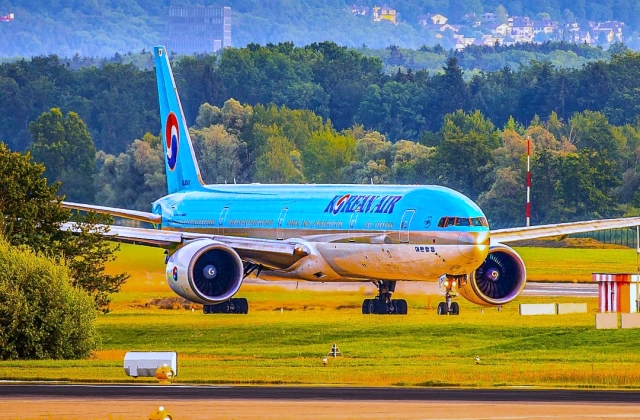
Korean Air, South Korea’s premier carrier, announced it would delay its merger with Asiana Airlines. The airline revealed the date would be moved to 2024.
The Korea Times reported that Korean Air originally planned to merge with Asiana by 2022 after investing KRW1.5 trillion in June last year to purchase 63.7% of its stake. But a new ruling from the office of Rep. Park Yong Jin stated that Korean Air forwarded a post-merger integration plan to Korea Development Bank (KDB), where it proposed to acquire Asiana in 2022 and fully merge with it by 2024.
Possible cause of the delay
Korean Air will become the seventh-largest airline in the world once its merge with Asiana is completed. However, it seems that there are many hindrances for the two South Korean airlines merger, and it includes concerns about the future operations of the low-budget carriers that the two companies operate like the Air Seoul, Jin Air, and Air Busan. Possible issues about monopoly in the airline industry were also raised.
Aside from these, a source revealed that delay could also be due to Korean Air’s difficulties in getting the approval of eight antitrust authorities in nations being serviced by the airline. In fact, based on the documents that were submitted in January, only Turkey has given its consent for the merger.
It was learned that Korean Air is still waiting for the stamp of approval from seven countries, including South Korea, the U.S., Taiwan, Japan, China, Thailand, and Vietnam. For the deal to proceed and be completed, the carrier is required to obtain at least four approvals.
There is also a downside to this approval requirement. In case Korean Air failed to secure the minimum number of consents, the merger will not happen, plus there is a possibility that the airline could be prohibited from operating in countries that rejected the merger.
The end of duopoly with the Korean Air and Asiana Airlines unification plans
Meanwhile, once the two airlines successfully become one in 2024, it will effectively end the duopoly in South Korea’s full-service airline market, as per Pulse News. This will now turn into a monopoly since the two major airlines that have operated separately for 36 years will now serve the country as one.
Finally, although there are concerns over the merger, some are looking at the unification in a positive way. The pandemic dampened the airline industry, and the merge is one way to survive and stay afloat in the business amid the crisis.