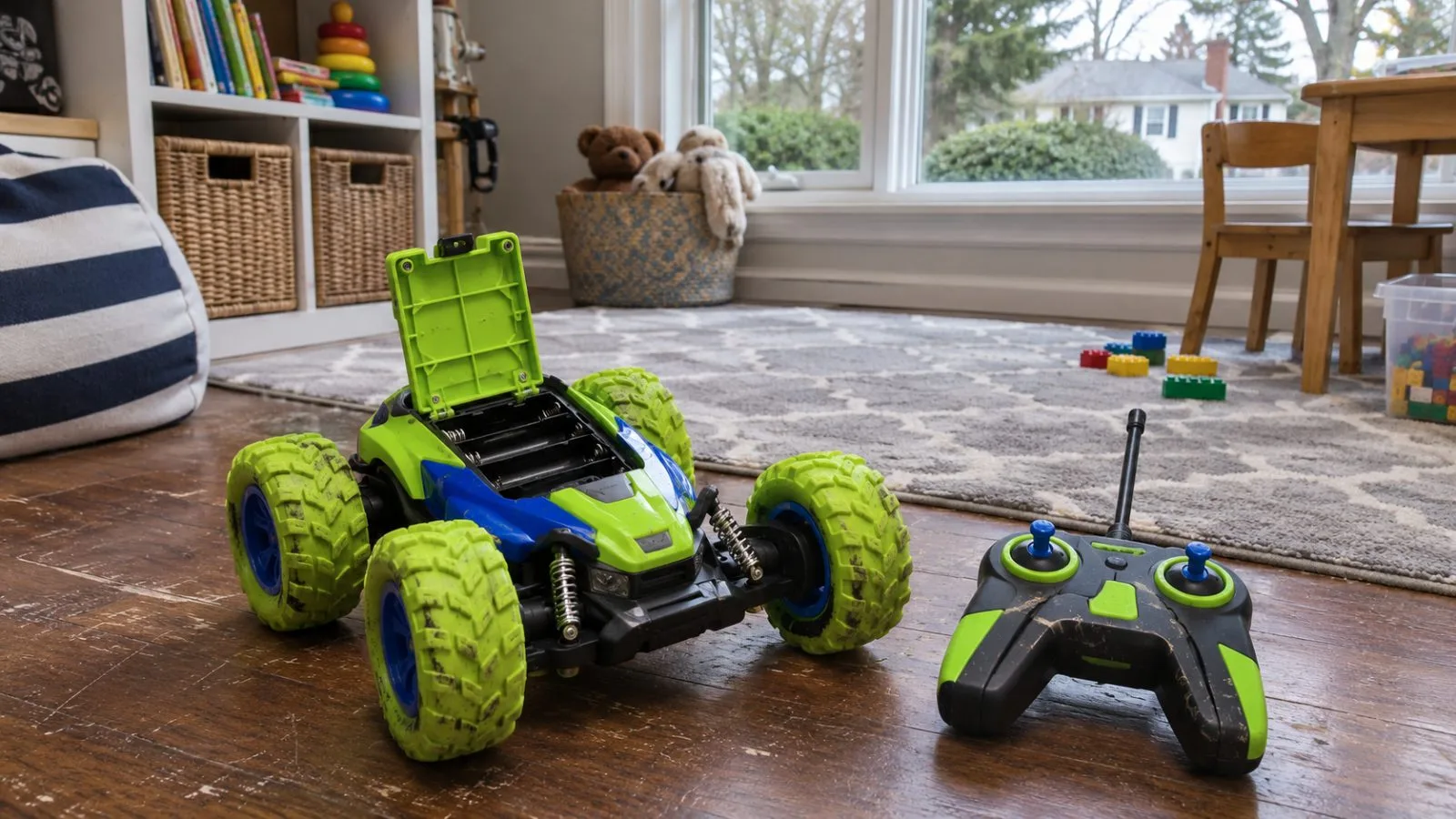
A recall notice issued Nov. 12 by the U.S. Consumer Product Safety Commission (CPSC) covers about 294 4WD stunt-vehicle toys sold as Kakgold after the agency said children can reach batteries in their remote controls. The notice lists no reported incidents or injuries.
Shenzhenshi Juteng Lechuang Technology Co., Ltd., which does business as Kakgold, is identified in the notice as the retailer; China is listed as the country of manufacture. The cars were sold on Amazon.com from July through September 2026 for $34 to $50. They have lime green and blue bodies, black chassis, four black wheels with lime trim and diagonal rollers, plus checkered patterns, an “X” design and “PRO” and “RACING” markings.
The remotes contain button cell and lithium-ion batteries, but the notice does not say which kind is accessible. The CPSC says the products violate the mandatory safety standard for toys. Its guidance says battery-operated toys should keep batteries beyond children's reach during play. For toys using button cell or coin batteries, the agency's guidance calls for a compartment that takes a screwdriver, coin or another tool to open. It warns that swallowing a button battery can cause severe internal harm or death; a swallowed battery can burn through a child's throat or esophagus in as little as two hours.
Consumers should stop using the toys immediately and email Kakgold at [email protected] for information about a full refund. The CPSC says buyers will be asked to mark the toy “RECALLED,” throw it in the trash and email the company a photo showing the disposal. The agency says button cell batteries should be disposed of or recycled through local hazardous-waste procedures.