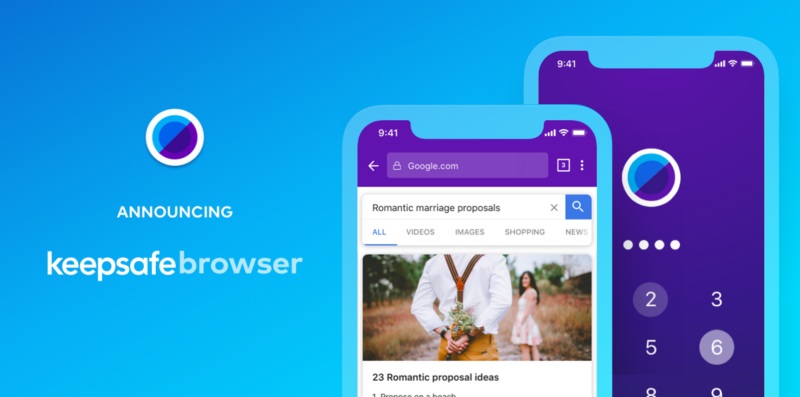
Software company Keepsafe further expands its online security-focused services by introducing its very own mobile browser app.
In the past several years, major online companies such as Google and Mozilla have introduced private browsing options in their browsers, Chrome and Firefox, respectively. These, however, only stop a computer or mobile device from saving browsing histories and search keywords.
Now, Keepsafe enters the browser competition with a completely different approach: by offering an app that is primarily designed to let users browse the internet without leaving any trace. So, there is the obvious contrast between the Keepsafe browser and Chrome or Firefox. Private browsing is not just an option, but the main service it offers.
“Since its founding, Keepsafe has been on a mission to restore privacy to people’s daily lives,” says Keepsafe co-founder and CEO Zouhair Belkoura in a statement. ”Understanding the range of current privacy issues people today face, Keepsafe’s Browser leads industry competitors with its discreet web browsing privacy controls.”
As expected, the highlight of the Keepsafe browser is the authentication requirement before accessing the app. This means that the app can only be opened by the actual device owner through a designated PIN or by means of any of the handset’s security features, such as face detection and fingerprint scanner.
Private sessions on Keepsafe browser can be done through Secret Tabs, which does not track cookies and opened URLs and does not leave anything cached. However, the app will also offer “normal” tabs in case users have some browsing activities they want to get back to.
Keepsafe Browser also features a set of “tracker blockers” for security. This will free users from getting tracked by advertisers and analytics software services.
The newly launched mobile browser joins Keepsafe’s collection of privacy-focused apps such as its very famous Keepsafe Photo Vault.
Mobile users can now download the Keepsafe browser on Android and iOS.