


 Circle Stock Falls 4% as Crypto Selloff Overshadows SAP Pay Expansion
  Chainlink Price Drops 3% Despite New CCIP Vault Launch
  XRP Ledger Activates New Security Feature for Banks and Stablecoins
  Bitmine to Stop Ethereum Buying After Reaching 5% ETH Supply
  Robinhood Buys $25 Million in Bitcoin for Corporate Treasury
  XRP Whale Activity Drops 27% in Eight Days Amid Market Sell-Off
  Dogecoin Liquidations Surge as DOGE Bulls Face Heavy Losses
  Bitcoin Rebounds to $82K as Trump Eases Iran War Fears
  Litecoin Marks 15 Years as Grayscale Backs LTC ETF Push
  Solana Price Drops 3% Despite Samsung USDC Partnership
  David Schwartz to Reveal XRP Ledger Future at Ripple Swell 2026
  Kazakhstan and Tether Explore Tenge Stablecoin and RWA Tokenization
  Evernorth XRPN Nasdaq Listing Delayed to October 12


 Add as a preferred source on Google
New Zealand Dollar is trapped in two bearish forces, one is coming from lower commodity prices and weakness In China, while another is from its central bank's aggressive monetary easing.
Since April, Reserve Bank of New Zealand (RBNZ) has reduced policy rates for three consecutive time from 3.5% to 2.75%. At least another 25 basis points rate reduction is expected this year. There are two meetings left for RBNZ this year, one in October another in December.
While outlook is still bearish for Kiwi against Dollar, key commodities for the economy needs to be monitored to have a feel of the turnaround in the economy.
Price of most of these commodities are declining in global market, though aggressive drop in Kiwi has somewhat shielded the adverse effects of the fall as many registered rise in terms on New Zealand Dollar.
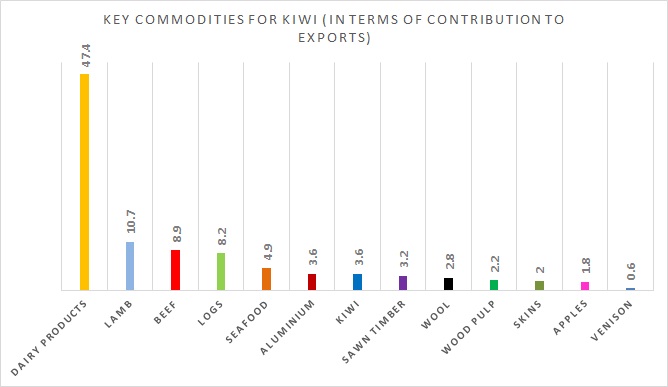
Key commodities for Kiwi and their weightages (in terms of exports)
- Importance of Dairy products highest for New Zealand economy (47.4%), followed by Lamb (10.7%), Beef (8.9%), Logs (8.2%), Seafood (4.9%), Aluminium (3.6%), Kiwi fruit (3.6%), Sawn Timber (3.2%), Wool (2.8%), Wood pulp (2.2%), Skins (2%), Apples (1.8%) and Venison (0.6%).
Kiwi has better prospect of recovery going ahead compared to its neighbor Aussie, due to the economy's dependence on soft commodities than hard ones.







