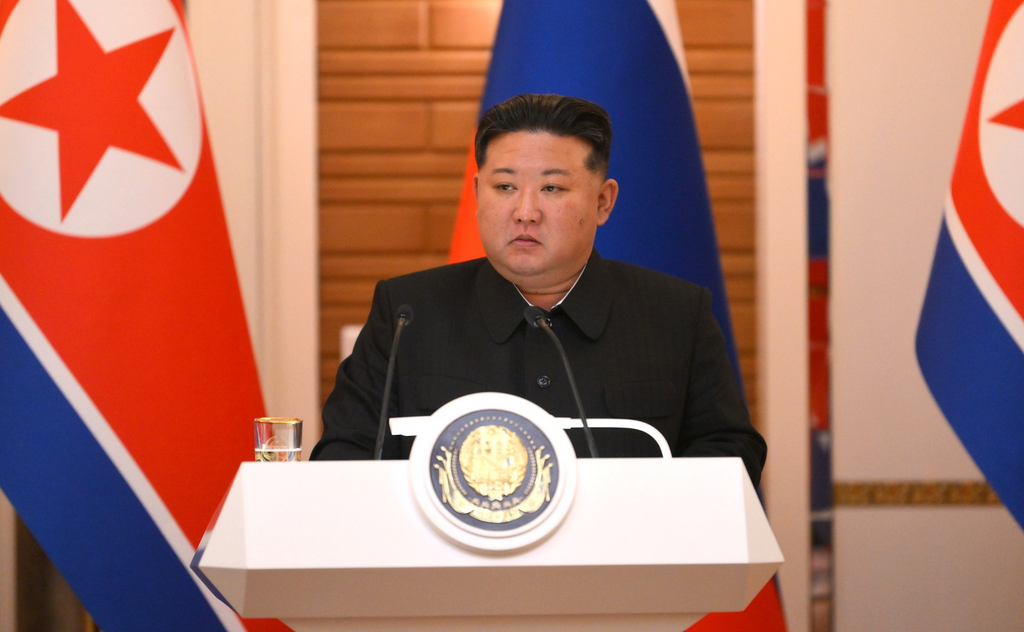
North Korean leader Kim Jong Un declared that the country has overcome recession and achieved major economic goals over the past five years as he opened the Ninth Party Congress, according to state media KCNA. The high-profile political gathering, held every five years, serves as a platform to review national performance, outline new policy objectives, and potentially reshuffle key leadership positions within the ruling Workers’ Party.
In his opening speech, Kim emphasized what he described as “significant accomplishments” across politics, the economy, national defense, culture, and diplomacy. He credited these achievements to strengthened self-reliance and claimed North Korea had reshaped its position in the global geopolitical landscape. Notably, Kim did not address relations with the United States or South Korea, nor did he mention the country’s nuclear weapons program.
The congress, attended by around 5,000 party members, is expected to set new five-year economic and military development goals. Observers anticipate a large-scale military parade showcasing North Korea’s defense capabilities and weapons development plans. Analysts are also watching closely to see whether Kim will assume the title of “president” and whether his teenage daughter, Ju Ae, will appear or receive an official role, fueling ongoing succession speculation.
Kim acknowledged that the previous Eighth Party Congress was held during “extremely challenging” times, referencing natural disasters, international sanctions, and the COVID-19 pandemic. North Korea’s economy experienced its worst contraction in 23 years in 2020, according to South Korea’s central bank, due to U.N. sanctions, pandemic-related lockdowns, and severe weather conditions.
However, recent estimates from the Bank of Korea suggest economic growth rebounded by 3.7% in 2024, marking the fastest expansion in eight years, partly driven by expanded trade with Russia. Kim recently highlighted the completion of 50,000 housing units in Pyongyang as a major achievement under the previous five-year plan.