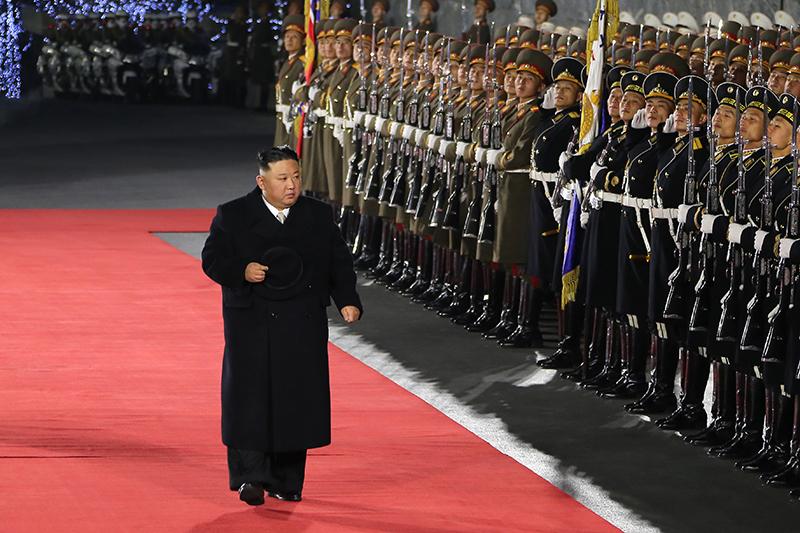
North Korean leader Kim Jong Un has overseen the test-firing of long-range surface-to-air missiles near the country’s east coast, according to a report by state media outlet KCNA. The missile test, conducted on Wednesday and reported Thursday, highlights North Korea’s continued focus on strengthening its military and advancing strategic weapons technology amid growing regional tensions.
KCNA said the test was designed to evaluate new high-altitude missile technology as part of the nuclear-armed state’s defence development programme. The missiles reportedly destroyed aerial targets at a distance of about 200 kilometres, demonstrating enhanced range and precision. Kim Jong Un personally observed the launch and praised the progress in what the regime calls essential steps toward national security.
In addition to the missile test, Kim also inspected construction work on a nuclear-powered submarine weighing approximately 8,700 tons. According to KCNA, the submarine will be capable of launching surface-to-air missiles and forms part of the ruling Workers’ Party’s plan to modernise the North Korean Navy. This naval upgrade is one of five key defence policies aimed at expanding the country’s military capabilities. KCNA did not disclose the location or timing of Kim’s visit to the submarine construction site.
Kim Jong Un was quoted as saying that the full-scale development of nuclear capabilities and naval modernisation is both inevitable and necessary, citing what he described as an increasingly unstable global security environment. He also criticised South Korea’s plan, agreed with the United States, to pursue the development of a nuclear-powered submarine, claiming it would further inflame tensions on the Korean Peninsula and threaten North Korea’s national security.
In a separate statement, North Korean state media condemned the recent arrival of the U.S. nuclear-powered submarine USS Greeneville at the South Korean port of Busan. The visit, described by Pyongyang as an act that escalates military tensions in the region, was confirmed by South Korea’s navy as a routine stop for crew rest and resupply. North Korea has also accused Japan of showing intentions to acquire nuclear weapons, alleging encouragement from South Korea’s submarine plans.
The latest developments underscore heightened military activity and diplomatic strain involving North Korea, South Korea, the United States, and regional powers in Northeast Asia.