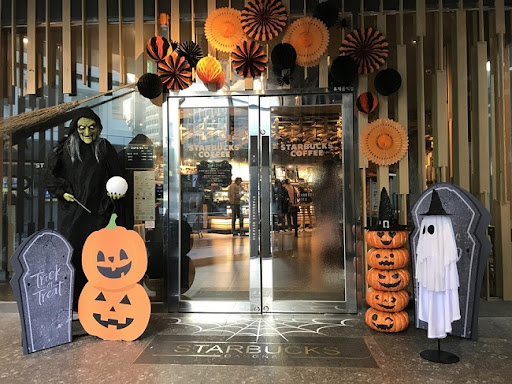
Starbucks Korea stores have set restrictions on how many of the 23 newly released Halloween goods and merchandise each customer could buy after employees protested its marketing strategy for imposing a heavy workload.
The special merchandise consists of tumblers, mugs, cold cups, key chains, and dolls.
There were also two of the two cards, three drinks, and seven food products.
The Starbucks outlets also displayed a sign that listed the stock available.
Many consumers began purchasing the Halloween specials early in the morning, causing items with buying restrictions to run out rapidly.
Second-hand transaction platforms were soon selling the new Starbucks merchandise at a higher price on the same day of its release.
Last week, employees of Starbucks Korea stores staged a demonstration against the excessive workload caused by the company’s marketing events.
The workers hired two trucks that drove around Seoul with signs calling for improved work conditions.


Japanese Business Leaders Urge Government Action as Weak Yen Strains Economy
Locked up then locked out: how NZ’s bank rules make life for ex-prisoners even harder
Gold Prices Rebound in Europe as Geopolitical Tensions and Fed Outlook Support Bullion
Britain has almost 1 million young people not in work or education – here’s what evidence shows can change that
Parents abused by their children often suffer in silence – specialist therapy is helping them find a voice
The Beauty Beneath the Expressway: A Journey from Self to Service
Why have so few atrocities ever been recognised as genocide?
Why a ‘rip-off’ degree might be worth the money after all – research study
South Korea Factory Output Misses Forecasts in November Amid Ongoing Economic Uncertainty
Citi Forecasts a Volatile but Ongoing Bull Market for S&P 500 in 2026
Oil Prices Stabilize at Start of 2026 as OPEC+ Policy and Geopolitical Risks Shape Market Outlook
Trump Delays Tariff Increases on Furniture and Cabinets for One More Year
Federal Reserve Begins Treasury Bill Purchases to Stabilize Reserves and Money Markets
AI is driving down the price of knowledge – universities have to rethink what they offer
China Imposes 55% Tariff on Beef Imports Above Quota to Protect Domestic Industry
U.S. Dollar Slides Toward Biggest Annual Loss Since 2017 as 2026 Risks Loom 


