


 Best Gold Stocks to Buy Now: AABB, GOLD, GDX
  FxWirePro: Daily Commodity Tracker - 21st March, 2022
  Gold Prices Fall Amid Rate Jitters; Copper Steady as China Stimulus Eyed


 Add as a preferred source on Google
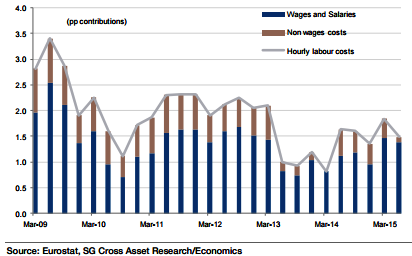
Euro area's non-wage labour costs are the additional amount to be paid on top of gross direct remuneration such as the cost of social security payments, provision of company pension schemes, sick pay, etc.
It is the slower growth rate of non-wage labour costs in Q2 15 (0.4% yoy compared to 1.9% yoy growth in wages) that resulted in the lacklustre growth in labour compensation as wages and salaries have actually grown at a healthy pace.
Q2 15 saw a broad-based slowdown in non-wage cost across all euro area countries except for France where non-wage costs increased due to the waning impact of the CICE tax initiative in 2013 and 2014.
"In Germany, the impact of the increase in minimum wages starting early 2015 seems to have been the driving force behind a strong rise in hourly labour costs (3.1% yoy in Q2 2015)", says Socite Generale.

- News

- Economy

- Central Banks
- Investing
- Research
- Roundups
- Digital Currency
- Insights
- Technical Analysis
- Technology
- Business
- Law
- Health
- Nature
- Fintech
- Science
- Topic
- Opinions
- ©Econometrics LLC . All Rights Reserved.
Lacklustre growth in EU's labour compensation reflects dip in non-wage labour costs
Thursday, October 29, 2015 3:06 AM UTC
Editor's Picks



- Market Data
Most Popular




