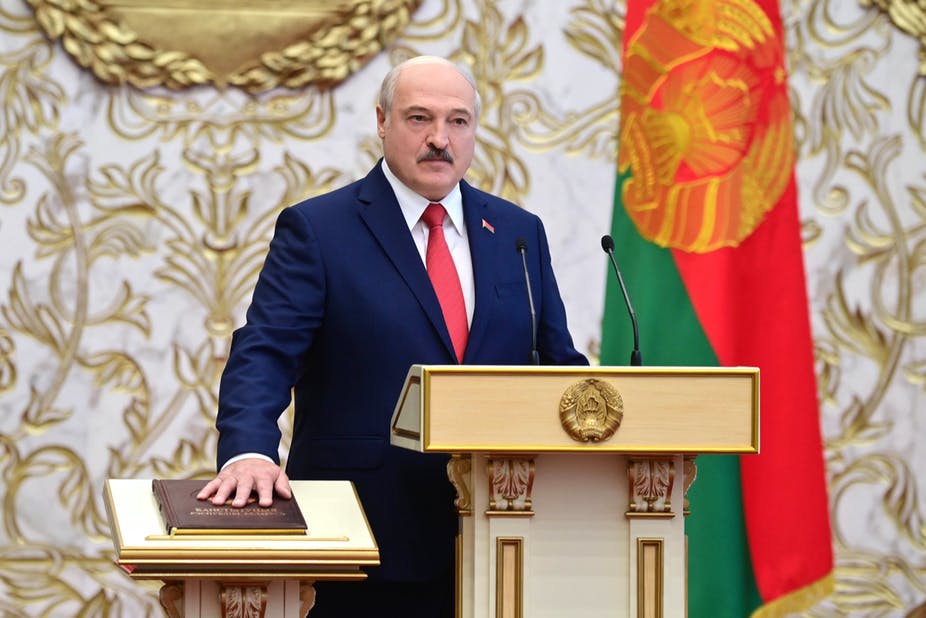
Belarusian President Alexander Lukashenko has called for urgent action to end the war in Ukraine, voicing support for U.S. President Donald Trump’s push for a rapid resolution while Washington continues diplomatic efforts to halt the conflict. In an interview aired in part on Tuesday by U.S. television outlet Newsmax and later published by Belarusian state news agency BelTA, Lukashenko warned that failure to stop the fighting could have serious global consequences.
Lukashenko, a close ally of Russian President Vladimir Putin, reiterated his belief that decisive leadership from the United States is crucial. He argued that Trump’s approach to the Ukraine war was correct and suggested that if similar policies had been implemented earlier, the conflict that began with Russia’s 2022 invasion might never have occurred. Belarus played a key role at the start of the war by allowing Russian forces to use its territory to launch the invasion of Ukraine.
According to Lukashenko, much now depends on Trump maintaining his current stance. He described the U.S. president as a strong and sometimes impulsive leader, urging him not to abandon efforts to bring the war to an end. Lukashenko said firm and consistent action from Washington could yield tangible results, even though he acknowledged that the conflict involves many stakeholders and cannot be resolved by one leader alone.
He emphasized the need to freeze the conflict as a first step, arguing that stopping the killing would allow room for negotiations and compromise. Lukashenko warned that if the war continues unchecked, it could escalate beyond Ukraine and “end badly for Europe and the entire world,” potentially triggering a wider global conflict.
The comments come as Trump leads renewed diplomatic initiatives aimed at ending nearly four years of war. An initial U.S. peace proposal, criticized by several European countries as favoring Russia, has reportedly been revised following consultations with Ukrainian and European officials. Talks involving U.S., Ukrainian, and European representatives were held in Berlin this week.
Despite these efforts, progress remains slow. Trump has publicly expressed frustration with both Russian President Vladimir Putin and Ukrainian President Volodymyr Zelenskiy over the lack of agreement. Russian forces currently control about 19% of Ukraine’s territory and continue gradual advances in the eastern Donbas region, underscoring the urgency of renewed peace negotiations.