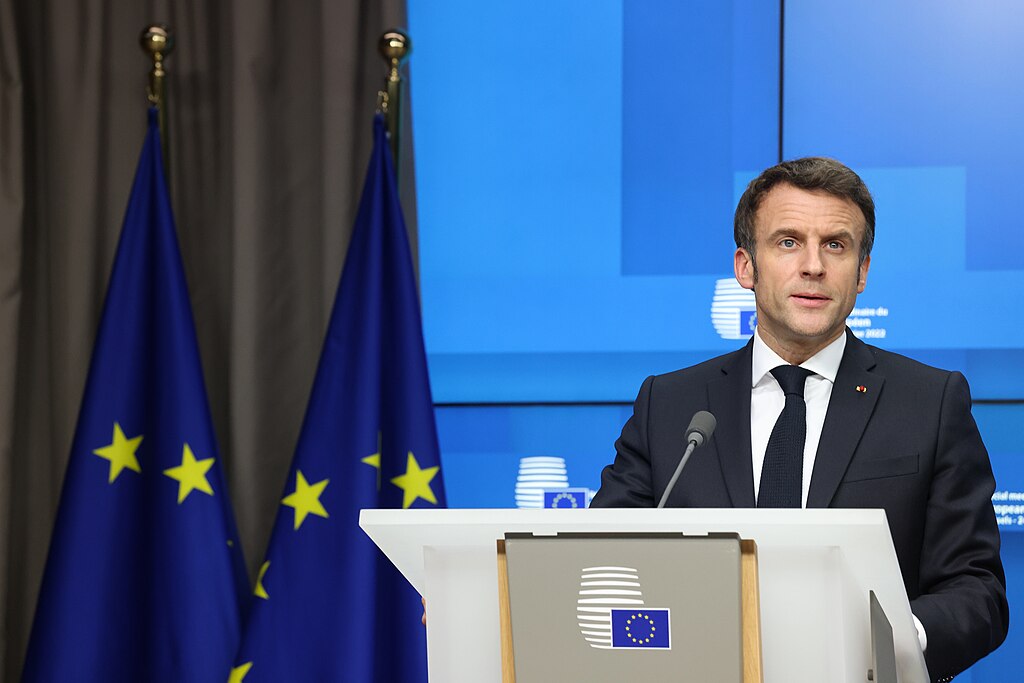
French President Emmanuel Macron has called for Europe to adopt a long-term strategic defense policy, emphasizing the need for enhanced deep-strike capabilities and a reassessment of France’s nuclear deterrent within the European security framework. Speaking at the Munich Security Conference, Macron stressed that Europe must evolve into a true geopolitical power capable of defending its own interests amid rising global instability.
Addressing concerns about Europe’s global standing, Macron rejected claims that the continent is in decline. He defended Europe’s efforts to combat disinformation and regulate social media platforms, arguing that unchecked digital influence threatens democratic institutions across Western nations. According to Macron, decisive action and unity are essential for safeguarding Europe’s political and economic future.
The French leader warned that Europe will continue to face an aggressive Russia, even if a negotiated settlement emerges from the ongoing Ukraine conflict. He cautioned against accepting a short-term agreement that fails to address fundamental security concerns. Instead, Macron urged European leaders to develop an independent strategic vision focused on long-term stability and collective defense.
Macron revealed that consultations have already begun with key partners, including Germany and the United Kingdom, to reshape Europe’s security architecture. He argued that the current system, largely designed during the Cold War, no longer reflects modern geopolitical realities. As part of this shift, France is evaluating how its nuclear deterrent strategy could contribute to broader European security discussions while remaining under national constitutional control.
In the coming weeks, Macron is expected to outline in greater detail how France’s nuclear doctrine could align with Europe’s evolving defense priorities. His proposal signals a renewed push for strategic autonomy, stronger military coordination, and a more assertive European Union defense policy in response to ongoing global threats.