


 MSTR Stock Rises as Barclays Raises Price Target to $175
  XRP Holds Steady at $1.39 as Crypto Market Faces Heavy Liquidations
  GRAM Price Jumps 9% as Telegram Expands Money Wallet
  Stellar Overtakes Ethereum in RWA Fund Inflows as XRP Leads Commodities
  XRP Ledger Activates New Security Feature for Banks and Stablecoins
  Crypto Liquidation Flush: BTC & ETH at a Glance
  Solana Whale Moves $51M in SOL to Coinbase Amid Price Drop
  DWF Labs Sues BitGo for $114 Million Over Alleged Token Sales Breach
  XRP Whale Activity Drops 27% in Eight Days Amid Market Sell-Off
  Ledger Investigates Alleged $86 Million Crypto Wallet Theft
  Bitcoin Rebounds to $82K as Trump Eases Iran War Fears
  Morgan Stanley Raises Coinbase Stock Price Target to $258 Ahead of Earnings


 Add as a preferred source on Google
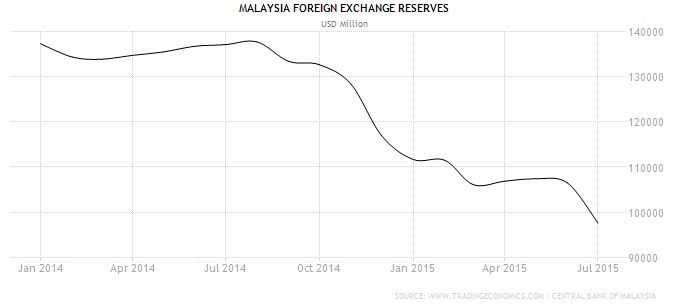
Malaysia's economy has taken sharp blow, with drop in commodity prices. Energy has been Malaysia's one of the top export commodities along with Palm oil, for which China is its biggest customer.
All the latest forecast (including one from OECD) is pointing to further deterioration in China, with some fearing recession in 2016.
With further slowdown in China, Malaysia's weak foreign exchange reserve position likely to deteriorate fast.
As of latest data, FX reserve has fallen below $100 billion and has now moved to $96.7 billion, close to its all-time low of $82.5 billion back in 1997. Data is till July 31st. Country faced FX reserve drawdown of $40 billion in about a year.
FX reserve must've fallen further, given China's devaluation of Yuan by almost 2% in August. There are high concentration (close to 20%) of Yuan in Malaysia's FX reserve. That portion is not likely to come in handy given lack of liquidity and acceptability of Yuan.
As of now, Malaysia can finance little over 6 months of imports with its FX reserve.
Malaysian Ringgit is currently trading at 4.251 per Dollar, further depreciation likely.







