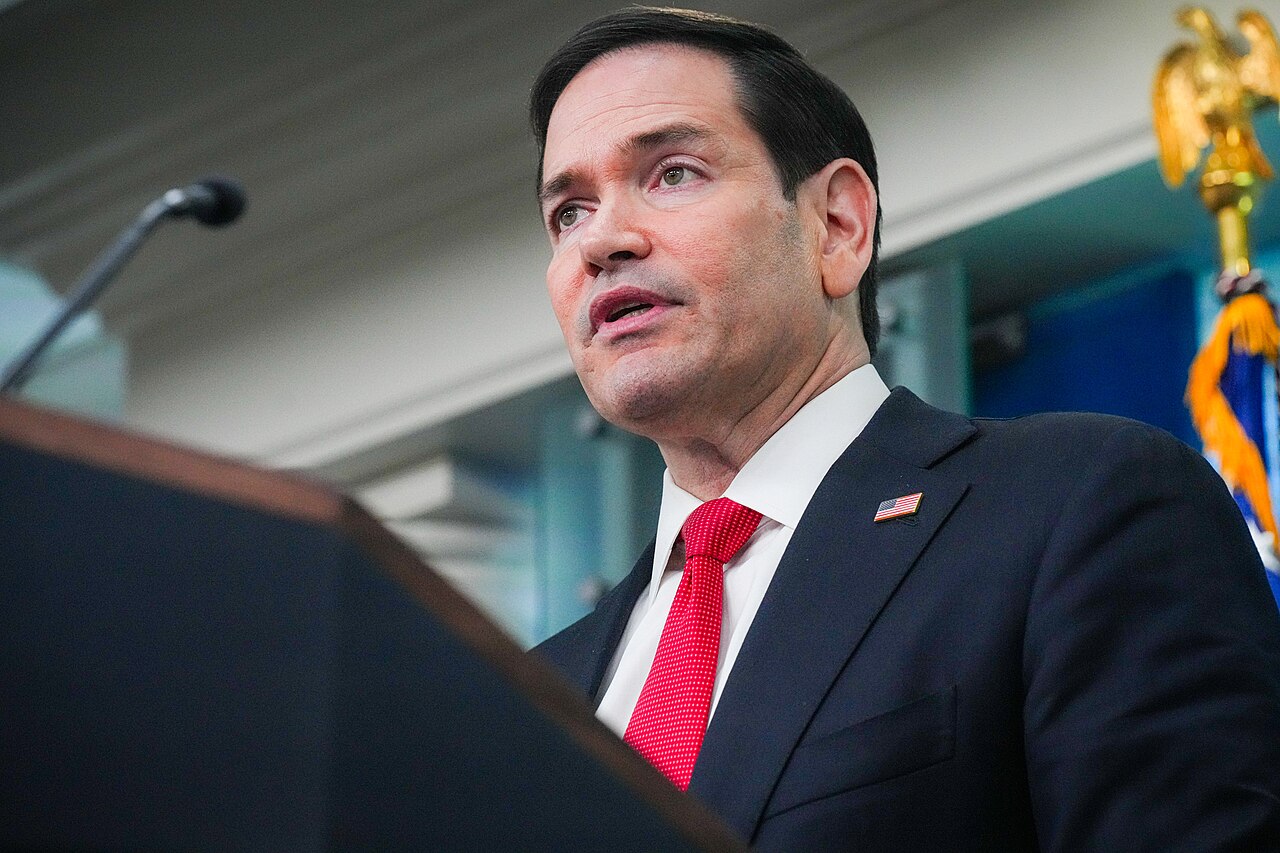
U.S. Secretary of State Marco Rubio met with leaders of the United Arab Emirates (UAE) and Kuwait on Wednesday, seeking to ease concerns among Gulf allies about the recently announced U.S.-Iran peace agreement. During his visit, Rubio emphasized that the United States remains committed to protecting the security and stability of its long-standing partners in the Middle East.
The agreement between the United States and Iran, signed last week, marks the first accord between American and Iranian presidents since Iran’s 1979 Islamic Revolution. The proposed deal includes a $300 billion development fund and limited sanctions relief for Tehran as part of broader efforts to end the four-month conflict involving Iran, the United States, and Israel.
Rubio’s three-day Gulf tour began in Abu Dhabi, where he met UAE President Sheikh Mohammed bin Zayed Al Nahyan, National Security Adviser Sheikh Tahnoun bin Zayed Al Nahyan, and Foreign Minister Sheikh Abdullah bin Zayed Al Nahyan. He later traveled to Kuwait and is expected to continue to Bahrain. All three countries host key U.S. military installations and were impacted by Iranian missile attacks during the recent conflict.
Speaking in Kuwait, Rubio stressed that Washington would not support any arrangement that compromises the security of its regional allies. Gulf nations remain concerned that financial benefits provided under the U.S.-Iran agreement could allow Tehran to strengthen its military capabilities. Regional leaders are also worried that the accord does not directly address Iran’s ballistic missile program.
The State Department confirmed that Rubio discussed the peace framework, regional stability, and the future of the Strait of Hormuz with UAE officials. The strategic waterway became a focal point during the conflict after commercial oil and gas shipments were heavily disrupted, affecting global energy markets.
Meanwhile, diplomatic efforts continue across the region. Qatar and Oman are exploring separate negotiations involving Iran, Iraq, and Gulf Arab states regarding the management and security of the Strait of Hormuz. Additional regional reconciliation talks are reportedly being considered in Saudi Arabia.
As discussions move forward, one of the most challenging issues remains Iran’s stockpile of highly enriched uranium. The 14-point memorandum of understanding signed by Washington and Tehran has initiated a 60-day negotiation period aimed at resolving outstanding concerns related to Iran’s nuclear program and long-term regional security.
Rubio’s visit highlights the Biden administration’s effort to balance support for a historic U.S.-Iran peace deal while reassuring Gulf allies that their security interests remain a top priority.