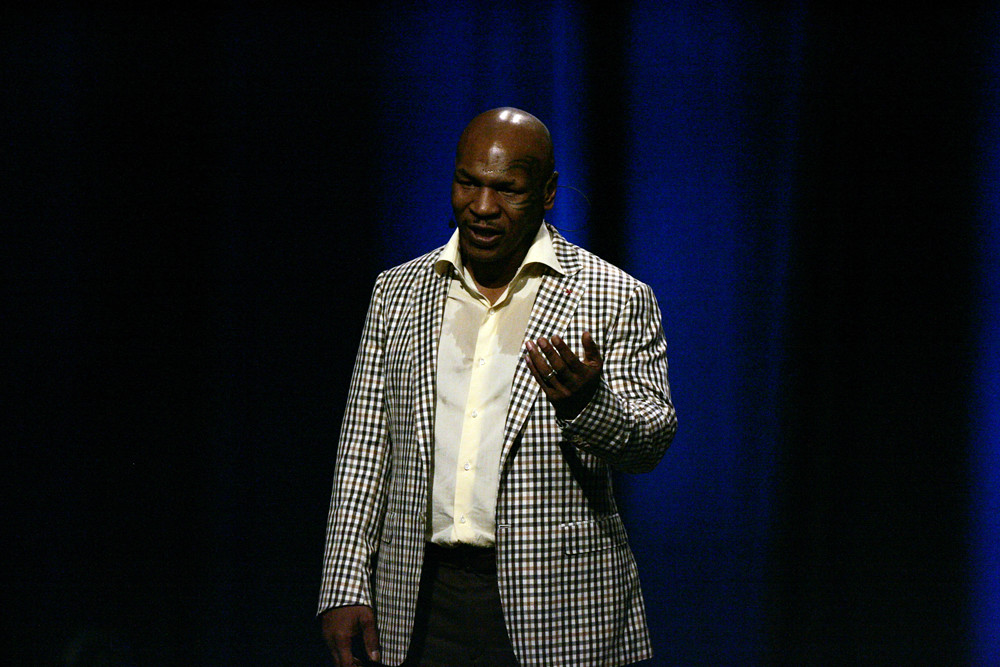
If at 58, I were to agree to a boxing match with a person half my age, much alarm would be caused. My daughters would burst into tears, my partner would have strong words, and my students would have final confirmation that I had lost the plot. I, however, am not “Iron Mike” Tyson.
On July 20, the former heavyweight boxing world champion is due to step into the ring at the AT&T Stadium in Arlington, Texas, to fight YouTuber-turned-boxer Jake Paul. Tyson will be 58, Paul will be 27.
Let’s take a look at what will be going on biologically for Iron Mike.
Receiving repeated blows to the body can tire a boxer out, and a well-aimed shovel hook to the liver can cause a “technical knockout”, but the head is the main target. Boxers are always looking for the knockout blow – and that only happens if you hit the head.
However, the head takes many forceful blows before a knockout is achieved – if it is achieved at all. Many boxers “go the distance” – in other words, manage to fight till the end, which can be anywhere from four to 12 rounds, each lasting three minutes. So what are the potential effects of all this head trauma?
The immediate effects may be minimal; the boxer may simply recover. But on some occasions, the effects may be devastating: a subdural haematoma can occur. In this condition, shearing forces cause tearing of bridging veins between the brain and blood vessels within the brain coverings, or meninges.
Bleeding from these torn veins causes a collection of blood that presses on the brain. This causes confusion, loss of consciousness, neurological disability and, in some cases, death.
In older people, the brain tends to lose volume. This lengthens the bridging veins and makes them more vulnerable to rupture. Alcoholism is known to accelerate brain shrinkage, and it appears that Tyson has this as a past risk factor.
I recall a patient, a boxer who had previously sustained a subdural haematoma and had physical disability and terrible depression. These were devastating permanent effects.
Shearing forces on the brain cause injury to neurons (brain cells). Nerve fibres can be torn and this can lead to effects that are either subtle or quite significant. This so-called “diffuse axonal injury” is cumulative over time and may lead to early loss of cognitive function. This is known as dementia pugilistica, or chronic traumatic encephalopathy (CTE).
Repeated injuries lead to the accumulation of abnormal tau proteins in the brain. As a result, brain cells are lost and the brain shrinks. The patient experiences changes in behaviour, mood and the ability to think.
In some instances, a condition resembling Parkinson’s disease may result from loss of neurons in a part of the brain called the substantia nigra. Muhammad Ali may have been afflicted with this, but it was never confirmed.
Heart problems
Middle age sees an increase in the likelihood of cardiac events such as arrhythmia (irregular heartbeat), angina (reduced blood flow to heart muscles), and myocardial infarction (heart attack). Keeping fit protects against cardiovascular disease, and Tyson’s exercise regime will benefit him greatly. However, the temptation to overdo it in the gym is always there.
Extreme exercise can lead to cardiac fibrosis (scarring of the heart muscles), which over time may lead to heart failure or, sometimes, sudden death.
Coronary atherosclerosis (narrowed heart arteries) is common in middle age, even in seemingly healthy people. However, it can lead to sudden death during exercise. Although regular exercise reduces this risk, a cocaine habit elevates it considerably – and Tyson has been known to have used the drug in the past.
A blow to the chest can also prove troublesome. Commotio cordis is a condition in which the heart muscle is damaged by such a blow. This can lead to an irregular heartbeat, reduced ability of the heart muscles to contract, and death. Quite uncommon, but coronary artery disease might make things worse.
Age doesn’t have to be a barrier
So far, I have concentrated on Iron Mike, but what of his opponent, Jake Paul? He is a much younger man and may well be free of cardiac disease and brain atrophy, which may protect him, to an extent. However, he has less boxing experience and is a late entrant to boxing.
There are plenty of examples of boxers in their 50s and 60s still fighting well and defeating younger competitors. If Tyson retains his speed, power and ability to outwit Paul, then Tyson may prevail.
Finally, let us remember that exercise at all ages is good for us, and there is good evidence that boxing in moderation has many health benefits.