


 Global Markets React to Strong U.S. Jobs Data and Rising Yields
  UBS Projects Mixed Market Outlook for 2025 Amid Trump Policy Uncertainty
  Goldman Predicts 50% Odds of 10% U.S. Tariff on Copper by Q1 Close
  Moody's Upgrades Argentina's Credit Rating Amid Economic Reforms
  UBS Predicts Potential Fed Rate Cut Amid Strong US Economic Data
  US Futures Rise as Investors Eye Earnings, Inflation Data, and Wildfire Impacts
  Urban studies: Doing research when every city is different
  Bank of America Posts Strong Q4 2024 Results, Shares Rise
  Mexico's Undervalued Equity Market Offers Long-Term Investment Potential
  Energy Sector Outlook 2025: AI's Role and Market Dynamics
  U.S. Stocks vs. Bonds: Are Diverging Valuations Signaling a Shift?
  European Stocks Rally on Chinese Growth and Mining Merger Speculation
  China’s Growth Faces Structural Challenges Amid Doubts Over Data
  Geopolitical Shocks That Could Reshape Financial Markets in 2025
  Gold Prices Fall Amid Rate Jitters; Copper Steady as China Stimulus Eyed
  US Gas Market Poised for Supercycle: Bernstein Analysts


 Add as a preferred source on Google
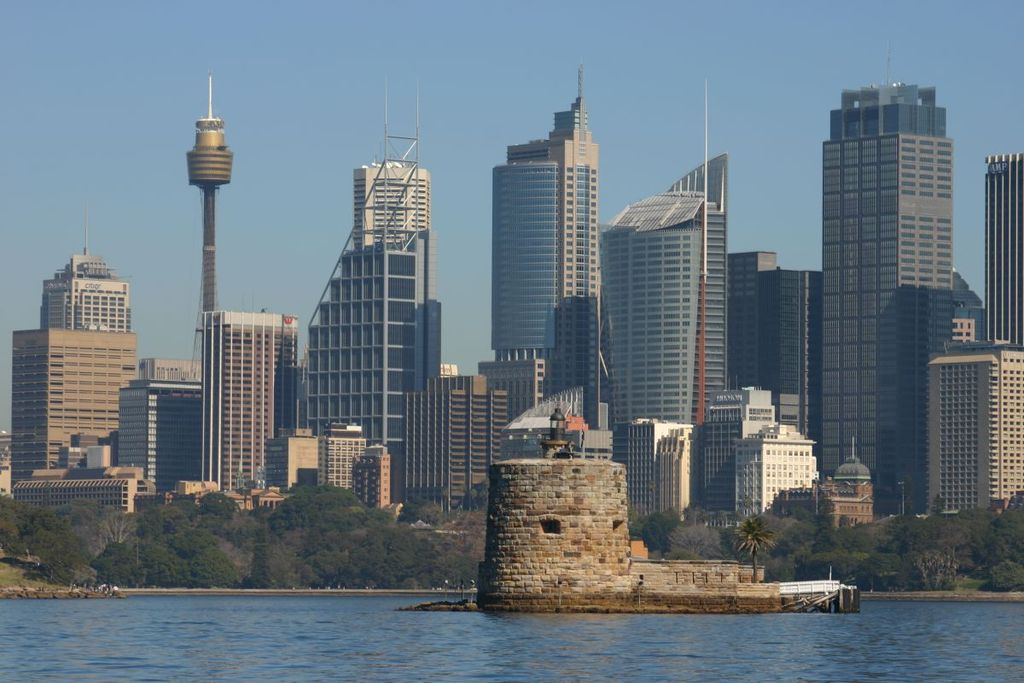
Moody's Investors Service says that Australia's four major banks face a moderate weakening in asset quality and a slowdown in earnings growth over the rest of 2016.
"More difficult operating conditions have become prevalent over recent months, resulting in a sharp rise -- from an exceptionally low base -- in large, single-name loan impairments in the banks' corporate portfolios," says Ilya Serov, a Moody's Senior Vice President.
"The expected pressure on asset quality -- which currently appears moderate -- will derive from multiple headwinds, including potential further stress in resources-related sectors and regions, a worsening outlook for residential property developments, and continued stress in the New Zealand dairy sector," adds Serov.
"While the weakened outlook for corporate asset quality could put pressure on the major banks' credit profiles, particularly in the context of their very high ratings, we nevertheless expect the banks to remain strongly creditworthy on an absolute and through-the-cycle basis", he concludes.
Moody's conclusions are based on the 1H 016 financial results of the Australia and New Zealand Banking Group Limited (ANZ, Aa2/Aa2 stable, a1), National Australia Bank (NAB, Aa2/Aa2 stable, a1), and Westpac Banking Corporation (Westpac, Aa2/Aa2 stable, a1), and the 3Q 2016 trading update by the Commonwealth Bank of Australia (CBA, Aa2/Aa2 stable, a1). The conclusions are contained in a just-released report, "Banks - Australia: 1H 2016 Results Show A Weakening Outlook for Asset Quality; Stable Balance Sheet Buffers".
The four major banks' domestic retail franchises continue to exhibit exceptionally strong profitability and their residential mortgage portfolios are supported by record low interest rates. In addition, their balance sheets are solid, showing improved capital and liquidity buffers.
Moody's notes that the major banks reported higher loan impairments during 1H 2016, averaging 0.19% of gross loans, up from 0.16% in 2H 2015. CBA has also reported that its loan impairment rose to 0.25% during its 3Q 2016 reporting period. These results suggest that further deterioration, closer towards the long-run average of 0.35-0.40%, is likely.
Moody's also expects profitability to come under moderate pressure, due to additional provisioning and the negative impact on margins of a prolonged period of low interest rates.
On the other hand, capital levels are likely to remain stable or improve moderately, as the banks position themselves in anticipation of likely further regulatory reform.
They have also improved their liquidity buffers, with the Liquidity Coverage Ratio (LCR) rising to 126% for ANZ, 130% for CBA, 125% for NAB, and 127% for Westpac. In each case, an increase over the previously recorded LCR has occurred. The most recent levels are also somewhat above Moody's long-term expectations.







