Last week, a Japanese official said a Japanese construction firm was granted a sanctions exemption by the United States to pay a company owned by the Myanmar military. This may be the first publicized sanctions exemption should it be confirmed.
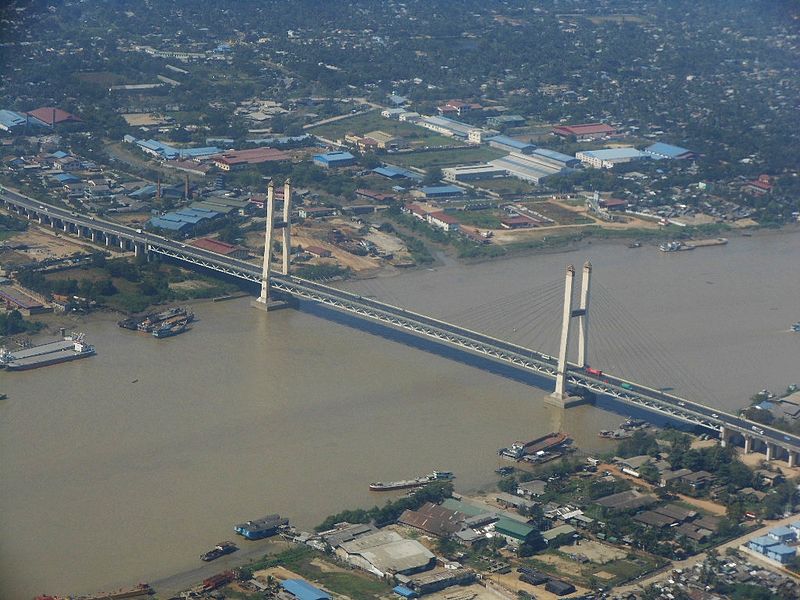
Friday last week, an official from the Japanese foreign ministry said a construction firm Yokogawa Bridge Corporation discussed with US officials a bridge in Myanmar’s Yangon region that is funded by the Japanese government. The bridge was approved before the Myanmar generals seized power in a coup in February 2021.
“They were able to continue the project because US authorities agreed to make an exception for the sanction in this case,” the official told Reuters but did not detail why Washington granted the exemption.
The US Treasury Department said it could not confirm whether it granted an exemption to pay Myanmar military-backed Myanmar Economic Corporation. If confirmed, it would be the first publicized sanctions exemption to the penalties issued against businesses linked to the junta.
The Myanmar military has since been under sanctions by the West since the February 2021 coup and has been accused of committing human rights abuses in its crackdown on coup opponents. The Treasury has also targeted the MEC, making the designation in March 2021, not long after the coup was carried out.
Human Rights Watch said financial transactions showed that the Yokogawa Bridge Corporation paid MEC around $1.3 million from July to November 2022. The group said the payments were transferred through Japan’s Mizuho Bank Ltd., which is part of a major Japanese holding company that has offices all over the world.
The Myanmar junta appears set to cement its rule over the country as it announced new election requirements on Friday for parties to contest in the elections that will be held this year. The junta has pledged to hold elections in August, and state media said on Friday that parties that plan to contest nationally must have at least 100,000 members compared to the previous standard of 1,000. Parties must also commit to running for election in the next 60 days or be de-registered.
The new rules appear to be in favor of the military-backed Union Solidarity and Development Party, which is full of former generals. The party suffered major losses when Aung San Suu Kyi’s National League for Democracy beat them in the 2015 and 2020 elections.