


 Trump Administration Releases New UFO Files and Apollo Mission Records
  NASA Artemis II: First Crewed Moon Mission Since Apollo Takes Four Astronauts on 10-Day Lunar Journey
  Trump Signs Executive Order to Boost AI Research in Childhood Cancer
  SpaceX Delays Starship V3 Launch Ahead of Potential Record IPO
  Trump and Merck KGaA Partner to Slash IVF Drug Costs and Expand Fertility Coverage
  SpaceX’s Starship Completes 11th Test Flight, Paving Way for Moon and Mars Missions
  NASA Cuts Boeing Starliner Missions as SpaceX Pulls Ahead
  FDA Pilot Program Eases Rules for Nicotine Pouch Makers
  SpaceX Pivots Toward Moon City as Musk Reframes Long-Term Space Vision
  Eli Lilly’s Inluriyo Gains FDA Approval for Advanced Breast Cancer Treatment
  Neuralink Expands Brain Implant Trials with 12 Global Patients
  Blue Origin’s New Glenn Achieves Breakthrough Success With First NASA Mission


 Add as a preferred source on Google
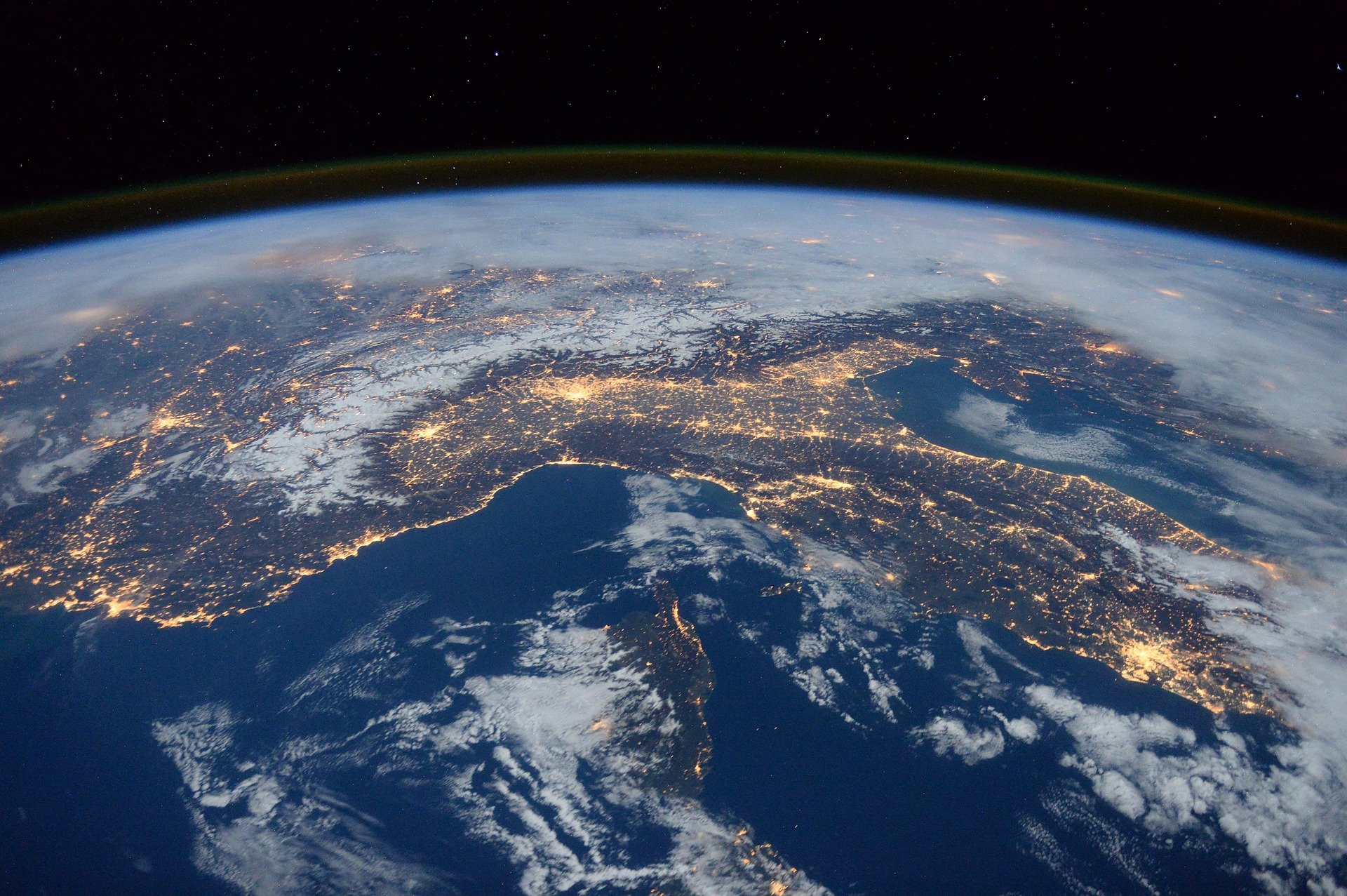
Not much is understood about the Earth’s magnetic field other than it produces auroras when the solar flares hit it during solar storms. However, NASA has been keeping an eye on one portion of the planet’s magnetosphere, where a dent that is beginning to split is a cause of concern for astronomers.
Express reports that a region of the magnetosphere known as the South Atlantic Anomaly, spanning from Chile to Zimbabwe, has grown incredibly weaker. The magnetic field on Earth that acts as a shield has also been found to weaken over a span of 200 years, according to experts. Upon seeing the state of the South Atlantic Anomaly, NASA has been keeping an eye over that portion of the magnetic field out of fears that it might split the magnetic field in two.
“Currently, the SAA creates no visible impacts on daily life on the surface. However, recent observations and forecasts show that the region is expanding westward and continuing to weaken in intensity. It is also splitting -- recent data shows the anomaly’s valley, or region of minimum field strength, has split into two lobes, creating additional challenges for satellite missions,” said NASA.
According to NASA’s Goddard Geodesy and Geophysics Laboratory’s Weijia Kuang, the current SAA could be a result of a “weakening dominance of the dipole field in the region.”
Another reason why NASA is closely watching the SAA is that the agency hopes to gain more understanding of the Earth’s core, as the planet’s magnetic field is formed from the liquid iron outer core that is spinning around the solid inner core.
Meanwhile, NASA was able to capture footage of the Perseids meteor showers last week, having peaked between August 12 and 13. The agency filmed the meteors entering the atmosphere and passing by as fireballs in the night skies. The Perseid meteors originate from the Perseus constellation, thus its name. These meteors are also known for being a spectacular watch and are best witnessed if the skies are clear.
Experts predict that the Perseids meteor showers will last until August 24. Amateur astronomers and space enthusiasts can expect to see as much as 90 fireballs appear in the skies per hour from around midnight.







