


 FDA Pilot Program Eases Rules for Nicotine Pouch Makers
  Jared Isaacman Confirmed as NASA Administrator, Becomes 15th Leader of U.S. Space Agency
  Trump Administration to Launch Autism Initiatives Targeting Acetaminophen Use and New Treatment Options
  Trump Signs Executive Order to Boost AI Research in Childhood Cancer
  SpaceX Pivots Toward Moon City as Musk Reframes Long-Term Space Vision
  Is space worth the cost? Accounting experts say its value can’t be found in spreadsheets
  Blue Origin New Glenn Rocket Explodes During Launch Pad Test, Delaying Space Ambitions
  SpaceX Prioritizes Moon Mission Before Mars as Starship Development Accelerates
  Eli Lilly’s Inluriyo Gains FDA Approval for Advanced Breast Cancer Treatment
  Trump and Merck KGaA Partner to Slash IVF Drug Costs and Expand Fertility Coverage
  China vs. NASA: The New Moon Race and What's at Stake by 2030
  Neuralink Plans High-Volume Brain Implant Production and Fully Automated Surgery by 2026


 Add as a preferred source on Google
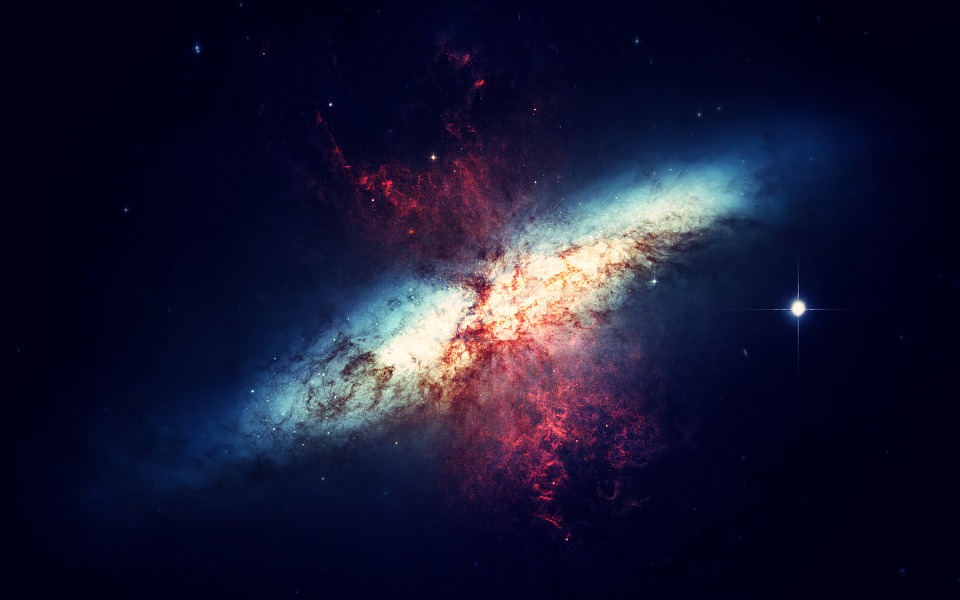
The universe has a way of still amazing everyone with the stars and planets and various other phenomena that occur beyond the planet. Recently, NASA released a photo taken by the Hubble Space Telescope of what is perhaps the most famous galaxy in the universe.
The Hubble Space Telescope, a collaboration between NASA and the European Space Agency or ESA, snapped photographs of a very famous galaxy, referred to as NGC 1803. This particular galaxy is lined with millions of stars and is surrounded by nothing but an inky-black space. NGC 1803 is 200 million light-years away from Earth, found in the southern constellation of Pictor or The Painter’s Easel. As to why it is a famous galaxy, it is because NGC 1803 was first discovered by one of the pioneers in Astronomy, Sir John Herschel.
Along with his father William and his aunt Caroline, they are known to be very influential figures in the field, having discovered and cataloged many stars and nebulae to their name. Their legacies remain until this day. Upon the release of the photos, NASA said that NGC 1803 is one in a “galactic pair. It was described by Dreyer as being ‘faint, small, and round,’ and located near to a very bright star to the southeast,” referring to the nebulous lenticular galaxy named PGC 16720.
Meanwhile, solar flares were captured for the very first time on the camera back in 2017. The Expanded Owens Solar Valley Solar Array Radio Telescope by the New Jersey Institute of Technology was the device used to capture this process caused by the eruption of a magnetic field on the Sun. The photos taken of the solar flare showed the progression of this process, revealing just when and where the eruption caused the plasma to heat up to a billion degrees Celsius.
Upon further studies, researchers were able to determine the measurements of the magnetic field by simply following the direction and ignition of the solar flare. The researchers were also able to track its conversion into the other forms of energy that fuel the solar flare’s trip to the corona. The changes in the corona’s magnetic field have only been estimated.







