


 Jared Isaacman Confirmed as NASA Administrator, Becomes 15th Leader of U.S. Space Agency
  Is space worth the cost? Accounting experts say its value can’t be found in spreadsheets
  Tabletop particle accelerator could transform medicine and materials science
  SpaceX Prioritizes Moon Mission Before Mars as Starship Development Accelerates
  FDA Adds Fatal Risk Warning to J&J and Legend Biotech’s Carvykti Cancer Therapy
  Trump Administration Releases New UFO Files and Apollo Mission Records
  Neuralink Expands Brain Implant Trials with 12 Global Patients
  Eli Lilly’s Inluriyo Gains FDA Approval for Advanced Breast Cancer Treatment
  China vs. NASA: The New Moon Race and What's at Stake by 2030
  Blue Origin New Glenn Rocket Explodes During Launch Pad Test, Delaying Space Ambitions
  SpaceX Delays Starship V3 Launch Ahead of Potential Record IPO


 Add as a preferred source on Google
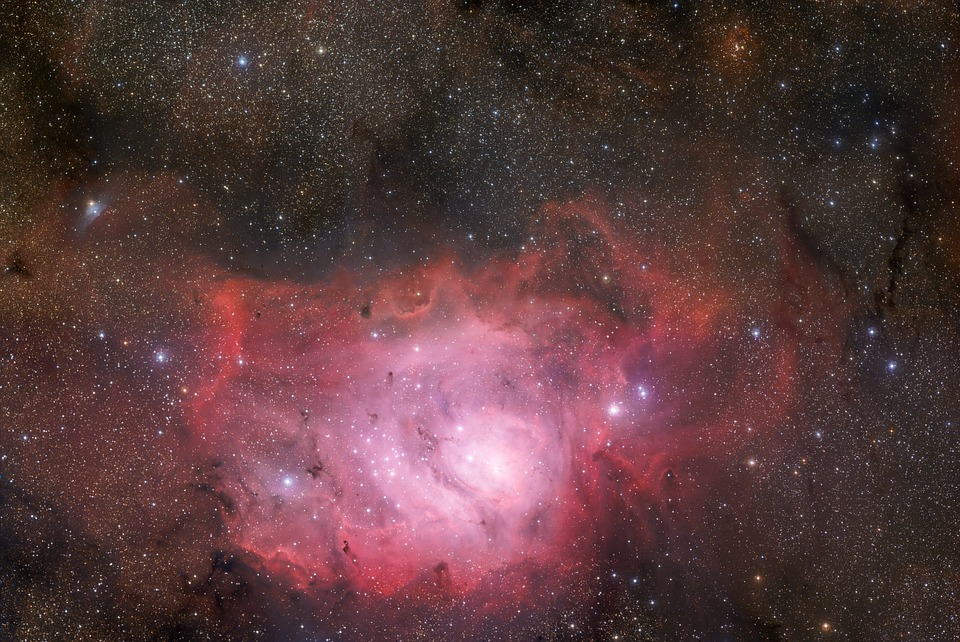
NASA and the European Space Agency’s Hubble Space Telescope is currently roaming around deep space, witnessing amazing phenomena that occur throughout the universe. Recently, NASA shared an image of a massive blush-colored nebula that the Hubble has taken.
NASA released an image of the Iris Nebula or NGC 7023 that was taken by the Hubble. The rosy-colored cosmic entity is found around 1,400 light-years away from Earth. What is amazing about this particular nebula is its size, spanning up to six light-years across. It should be noted that one light-year is equivalent to almost six trillion miles, making it extremely far in human terms. The agency revealed that NGC 7023 is made up of the usual components that make up other cosmic entities, which are dust and gas. These same components are also found in the composition of planets, stars, and solar systems.
As to its unique color, NASA revealed that the stars at the heart of that nebula are what produce the color. The stars are surrounded by clouds of dust which scatter the light.
“This beautiful, blushing nebula is unique amongst its counterparts. While many of the nebulae visible in the night sky are emission nebulae -- clouds of dust and gas that are hot enough to emit their own radiation and light -- Caldwell 4, otherwise known as the Iris Nebula or NGC 7023, is a reflection nebula,” said NASA.
The Hubble Space Telescope is on its last run of the universe this year. It will be retired by 2021 when the James Webb Space Telescope will be taking its place.
Meanwhile, NASA is also in the process of preparing for an upcoming Mars mission. The Perseverance Rover is currently on its way to the Red Planet where it will search for signs of life. The rover will make a landing on the Jezero Crater and to help it search for life, NASA has developed a state-of-the-art technology that could find signs of life on the surface and underneath.
The rover will use a ground-penetrating radar called RIMFAX. This device will help scientists get a clearer image of what may be found under the Martian surface and help astronomers understand how the crater came to be.







