


 Trump Signs Executive Order to Boost AI Research in Childhood Cancer
  NASA Partners with Katalyst to Save Swift Observatory with Innovative Docking Mission
  SpaceX Prioritizes Moon Mission Before Mars as Starship Development Accelerates
  Trump Administration Releases New UFO Files and Apollo Mission Records
  FDA Adds Fatal Risk Warning to J&J and Legend Biotech’s Carvykti Cancer Therapy
  China vs. NASA: The New Moon Race and What's at Stake by 2030
  SpaceX’s Starship Completes 11th Test Flight, Paving Way for Moon and Mars Missions
  Blue Origin New Glenn Rocket Explodes During Launch Pad Test, Delaying Space Ambitions
  Trump Administration to Launch Autism Initiatives Targeting Acetaminophen Use and New Treatment Options
  Neuralink Plans High-Volume Brain Implant Production and Fully Automated Surgery by 2026
  Cogent Biosciences Soars 120% on Breakthrough Phase 3 Results for Bezuclastinib in GIST Treatment
  Is space worth the cost? Accounting experts say its value can’t be found in spreadsheets


 Add as a preferred source on Google
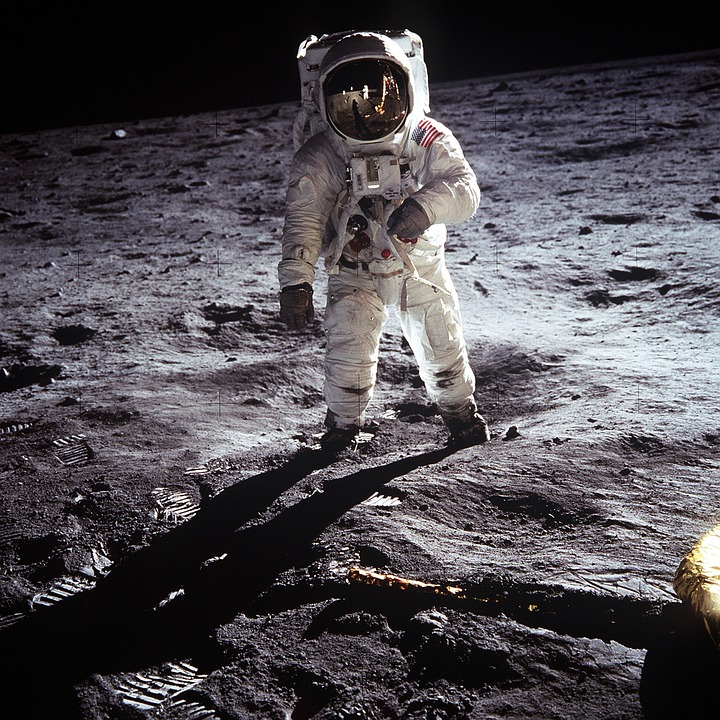
NASA is currently preparing to return to the Moon through its upcoming Artemis space program. With five Apollo missions having preceded this one, scientists had also discovered a mysterious set of footprints that did not belong to the astronauts that previously walked on the Moon.
In the “NASA’s Unexplained Files” program, scientists discovered another set of footprints that were not of the astronauts who last set foot on the Moon. The last Moon mission was Apollo 17, with astronaut Harrison Schmitt being among the last men to set foot on the lunar surface for a while. Along with his colleague Eugene Cernan, the two astronauts were able to cover more ground by creating their own way of Moonwalking as their footprints would remain intact for years to come.
However, in 2009, the Reconnaissance Orbiter sent back an image of another set of footprints that were 30 miles away from where Schmitt and Cernan walked.
According to the agency’s lunar scientist Peter Schultz, “They look like strange footprints marching across the surface, you wonder what caused them.” Although the footprints were found miles away from where the last astronauts walked, lunar geologist Benjamin Weiss said that the tracks had nothing related to human interaction.
“If the footprints were caused by a meteor chain, they should be arranged in a straight line. With meteors ruled out, scientists look for similar structures in the Solar System. They find a clue in the lava beds of California where similar craters cover a huge area,” said the series.
Aside from the mysterious footprints, another revelation was previously made about the Moon, in that it likely shielded the Earth from solar flares at one point in time before. A recent study by NASA suggested that the Moon in its earliest years may have protected Earth, which practically did not have an atmosphere at the time, from the dangerous solar flares.
The study’s lead author Jim Green, who is also the agency’s chief scientist, explained that the gravity of the Moon helped stabilize the Earth’s rotation around the Sun. At the time, the Earth was able to make a complete turn in five hours, but when it steadied, it slowed down to the 24 hours we know today.







