


 Oil Prices Rise as Hormuz Risks Offset IEA Stock Release
  Best Gold Stocks to Buy Now: AABB, GOLD, GDX
  Dollar Near 18-Month High as Euro, Yen and Pound Weaken
  Crypto Market Selloff Wipes Out $100B as Bitcoin Falls Below $83K
  Oil Prices Rise as Gulf Hurricane and Middle East Supply Risks Mount
  US Stock Futures Flat as Fed Minutes, Earnings Loom
  Wall Street Falls as Fed Minutes Signal Another Rate Hike
  Gold Prices Rise as Dollar Weakens, Treasury Yields Fall
  US Treasury Yields Ease After Strong 10-Year Auction as Global Bonds Struggle
  Iran Refuses to Halt Uranium Enrichment Amid US Nuclear Demands
  US Dollar Rises for Fourth Week as Fed Rate Hike Bets Grow
  Asian Currencies Mixed as Yen Weakens, Dollar Holds Firm


 Add as a preferred source on Google
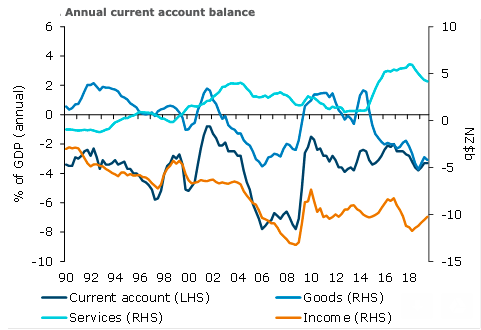
New Zealand’s annual current account deficit widened slightly from $10.2 billion in Q2 to $10.3 billion in Q3. In ratio terms, it was unchanged at 3.3 percent of GDP.
In seasonally adjusted terms, the current account deficit widened $0.3 billion from Q2, led by a widening goods deficit, as exports fell and imports lifted. New Zealand’s net international liability position widened $6 billion from Q2 to $172.8 billion, and widened 1.4 percentage points as a share of GDP to 56.3 percent.
The goods balance posted a deficit of 1.4 percent of GDP, versus a long-run average of +0.7 percent, reflecting still-buoyed demand for imports on the back of robust domestic consumption. The services balance posted a surplus of 1.3 percent of GDP, above its historical average of +0.8 percent, supported by solid growth in tourism exports over the past few years (despite some recent slowing).
And the income deficit of just 3.3 percent of GDP remains narrower than its historical average of 5.1 percent, reflecting low interest rates globally.
The unadjusted goods balance fell from surplus into deficit (from $0.9 billion to -$3.5 billion), as expected, with exports falling and imports lifting. Log and dairy led the decline in goods exports, more than offsetting a lift in the goods terms of trade (if the OTI is anything to go by). Meat prices in particular are benefiting from significant supply disruptions in China’s pork industry.
"The goods deficit is expected to remain broadly stable as a share of GDP. The lower NZD should dampen growth in import volumes, but softer global growth should keep world import prices subdued, providing an offset. Still-elevated net migration and a buoyant household sector will suck in the imports. On the exports side, constrained global dairy supply and demand for pork alternatives in China should keep meat and dairy prices elevated (more than offsetting slightly weaker NZ dairy production this season). But downside risks from weaker global demand remain," ANZ Research commented in its latest report.







