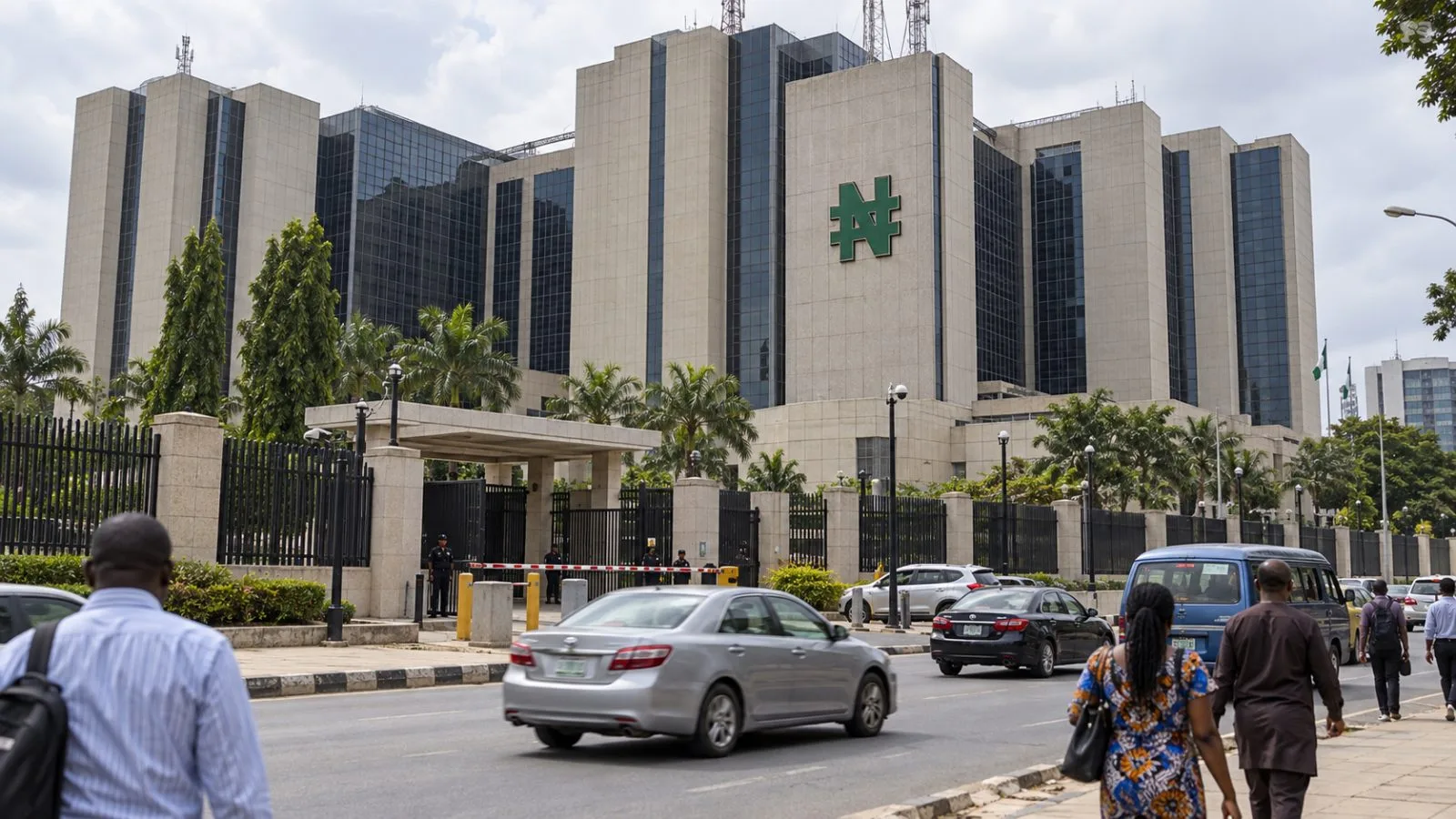
Nigeria’s naira weakened against the U.S. dollar at the official market on Oct. 26, while turnover reports that do not reconcile on their face left the scale of recent foreign-exchange trading uncertain.
MarketForces Africa, citing data from the Central Bank of Nigeria (CBN), reported that the Nigerian Foreign Exchange Market (NFEM) volume-weighted average was N1,367.61 per dollar on Oct. 26, compared with N1,361.84 on Oct. 23. The naira last closed weaker on July 31, at N1,368.22 per dollar.
BusinessDay reported NFEM turnover of $3.24 billion for Friday, Oct. 23, up 180.29% from $1.16 billion on Thursday. It also reported that the number of deals rose to 609 from 399, while noting that complete NFEM activity figures were unavailable when it filed.
Separately, Independent Newspapers, citing an FMDQ Exchange weekly report, put combined spot and derivatives turnover at $2.59573 billion for the week ended Oct. 23, down 0.95% from the previous week. That weekly total is below BusinessDay's one-day figure, but the reports do not say whether they cover the same transactions.
In a separate turnover series, MarketForces Africa, citing CBN data, reported $614.245 million on Monday, Oct. 26, down from $1.010 billion on Friday. It said the number of deals fell to 201 from 315.
BusinessDay also reported that First Bank of Nigeria raised its international transaction rate to N1,395 per dollar on Monday from N1,375 on Friday. Stanbic IBTC's rate for international payments on naira cards was N1,375 per dollar on Monday, the outlet said.
The CBN says its foreign-exchange operations help implement monetary policy, support exchange-rate stability and manage liquidity. It says reserve management is intended to sustain confidence in exchange-rate policy and help meet Nigeria's external obligations.
BusinessDay reported that CBN Deputy Governor Muhammad Sani Abdullahi cited reserve adequacy and potential portfolio inflows following Nigeria's return to a J.P. Morgan bond benchmark as supports for exchange-rate stability. Abdullahi also identified stronger foreign-currency demand, volatile oil prices and geopolitical disruption around the Strait of Hormuz as downside risks.