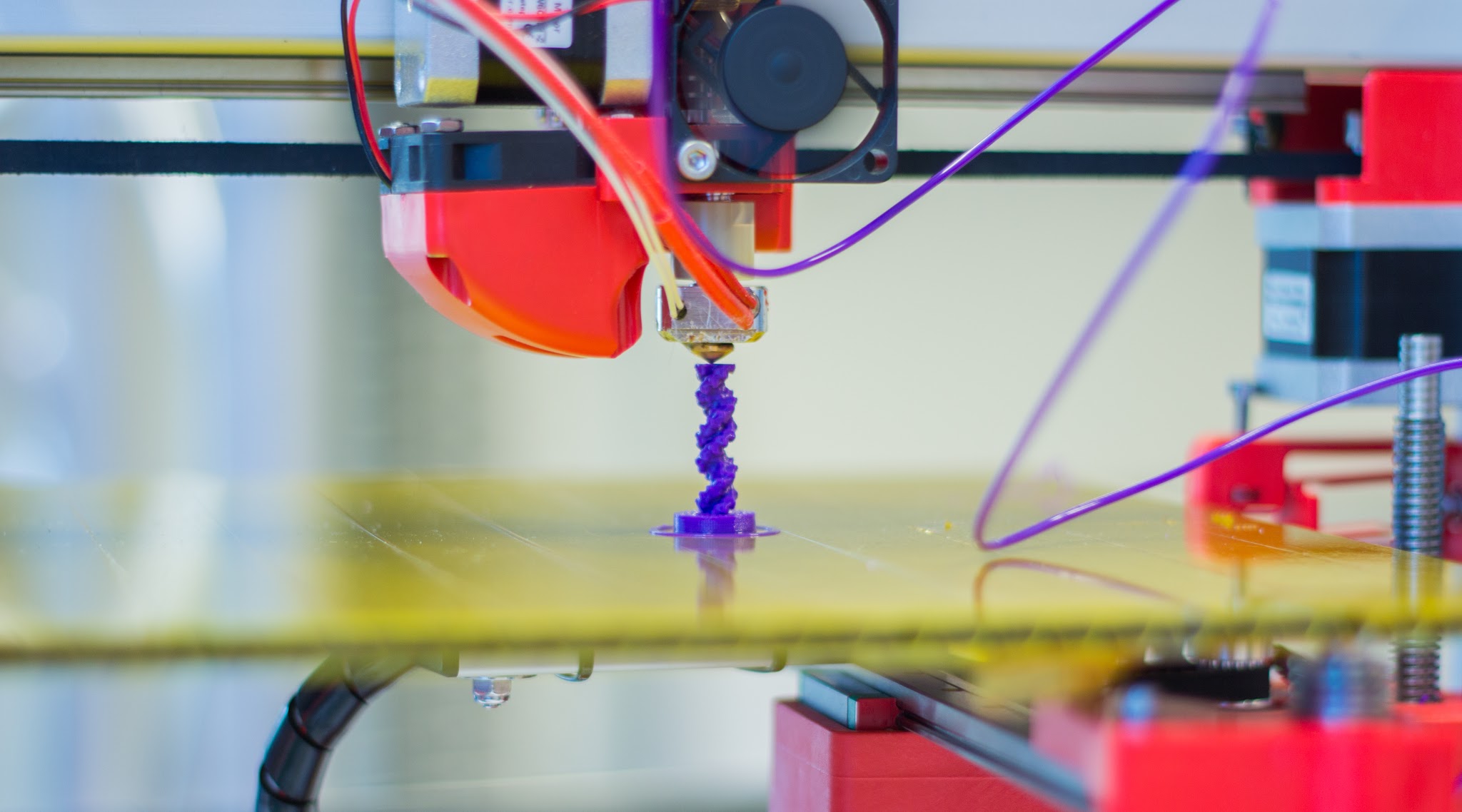
3D-Printing is one of the most exciting pieces of technology in modern times, with the ability to create pretty much anything in the comfort of one’s home being of particular interest to people. However, one of the biggest problems with the technology has to do with materials identification. Researchers have recently discovered a way to make this process more efficient and with 95 percent accuracy.
The traditional way of identifying materials to be used for 3D-Printing usually involves destroying the materials. Not only is this method inefficient, it’s also not as accurate and as cost-effective as what researchers from Carnegie Mellon University managed to create. By being considerably more accurate and effortless, the team expects their solution to be adopted over the next five years.
So, what exactly does this method involve? The secret is in machine vision, which teaches artificial intelligence on how to identify particular substances that fit a particular set of rules. As project lead Elizabeth Holm explains it, this makes the process not only less cumbersome, it’s also a lot more affordable.
"In traditional manufacturing, parts are often qualified through destructive testing. A company might produce multiple parts and physically test them to see how they hold up to stress and fatigue. However, that costs a lot of time and money, so it should be avoided in additive manufacturing in order to preserve the on-demand nature of 3-D printing," Holm said. "We therefore are looking to new qualification concepts like machine learning to guarantee successful 3-D printed builds."
What the machine vision is looking for are certain properties of the powdered materials that were the results of traditional destructive testing, TechXplore reports. These would include the materials’ toughness, their strength, and even their fatigue life.
These aspects are important to 3D-printing because their combination represents their viability as useful raw ingredients. By utilizing this new method, the technology just overcame a major obstacle to widespread adoption.