


 Crypto Market Selloff Wipes Out $100B as Bitcoin Falls Below $83K
  Wall Street Falls as Fed Minutes Signal Another Rate Hike
  Mike Rogers Calls for End to US-Canada Tariff War
  Trump Secures Russian Diesel Deal as US Fuel Prices Surge
  Oil Prices Rise as Hormuz Risks Offset IEA Stock Release
  European Stocks Fall as Oil Rises Ahead of Fed Minutes
  Dollar Near 18-Month High as Euro, Yen and Pound Weaken
  France to Release 10 Million Barrels of Diesel to Ease Fuel Prices
  RBI Raises Repo Rate to 5.50% in Hawkish Shift on Inflation Risks
  Gold Prices Fall as Fed Signals Another Rate Hike
  Oil Prices Trim Gains After Trump Rules Out Iran Strikes Before Midterms
  Bangladesh GDP Growth Accelerates to 4.6% on Industrial Rebound


 Add as a preferred source on Google
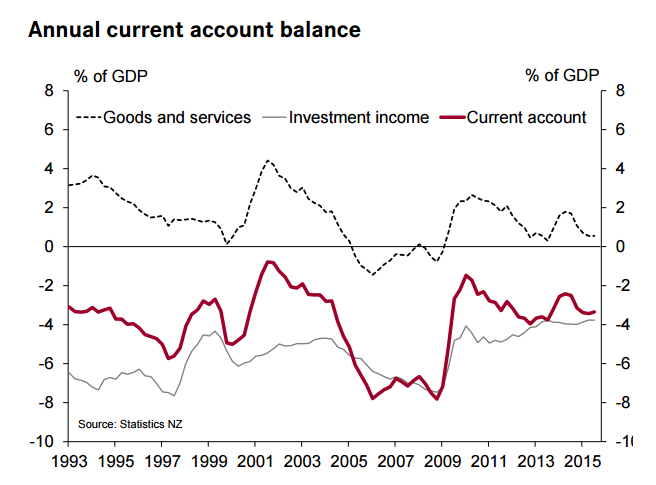
New Zealand's current account deficit narrowed slightly to 3.3% of GDP in the year to September. The result was in line with the market expectations, after accounting for some positive revisions to the June quarter figures that narrowed the annual deficit by 0.1 percentage points.
The current account deficit has remained remarkably steady over the last year, despite the steep fall in prices for dairy exports. More favourable prices for other commodities, growth in export volumes, and most importantly a strong rebound in tourist spending, have provided a substantial offset. While the deficit seen widening over the next year as the full impact of low dairy prices flows through, it is expected to remain well-contained relative to previous economic cycles.
The details of today's release don't provide any further insight into tomorrow's September quarter GDP report. Exports will make a positive contribution to growth, but much of this will come out of inventories. A solid 0.9% increase is expected in GDP, after two quarters of weak growth.

- News

- Economy

- Central Banks
- Investing
- Research
- Roundups
- Digital Currency
- Insights
- Technical Analysis
- Technology
- Business
- Law
- Health
- Nature
- Fintech
- Science
- Topic
- Opinions
- ©Econometrics LLC . All Rights Reserved.
New Zealand’s Q3 current account deficit narrows to 3.3% of GDP
Wednesday, December 16, 2015 2:30 AM UTC
Editor's Picks



- Market Data
Most Popular




