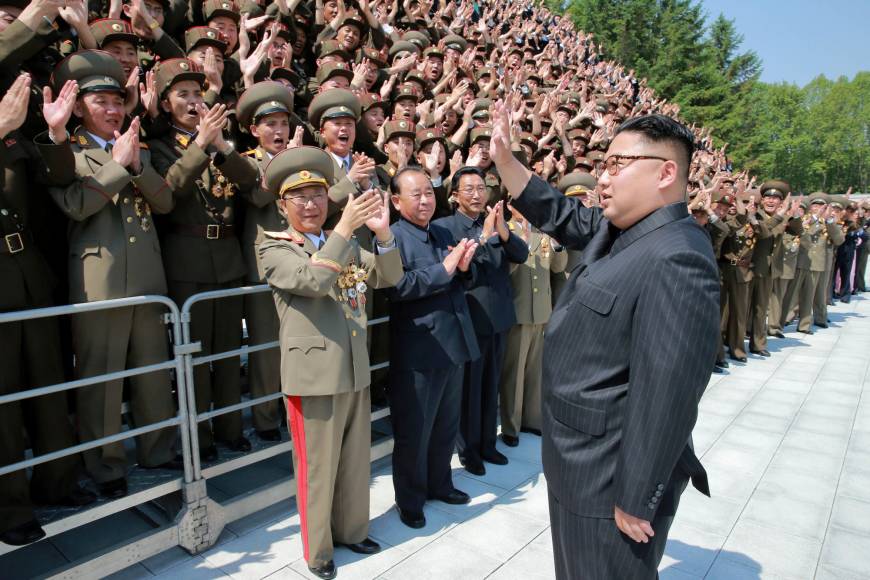
North Korea has approved new measures to strengthen its nuclear forces both "quantitatively and qualitatively," according to state media KCNA, as leader Kim Jong Un called for accelerated military modernization during a key ruling party meeting.
The decisions were made during an enlarged session of the Central Military Commission of the ruling Workers' Party held on Thursday. The meeting focused on boosting the country's military capabilities amid what Pyongyang described as growing security challenges.
KCNA reported that Kim emphasized North Korea's security and lasting peace can only be ensured by maintaining a powerful military capable of deterring and responding to all potential threats. As part of that strategy, officials approved plans to expand the country's nuclear arsenal while upgrading the technical infrastructure that supports combat systems.
The commission also agreed to modernize military bases by introducing standardized and specialized facilities designed to improve operational readiness. The report said the measures are intended to strengthen the overall effectiveness of North Korea's armed forces.
In addition to nuclear development, the meeting highlighted efforts to enhance the capabilities of the Reconnaissance General Bureau, North Korea's military intelligence agency. Authorities plan to expand its role and improve reconnaissance and intelligence-gathering operations, reflecting a broader push to strengthen national defense.
The commission also discussed large-scale naval modernization plans, including the construction of advanced naval bases and upgrades to shipbuilding facilities. KCNA said these projects reflect a significant shift in the status and strategic role of the North Korean navy as the country seeks to expand its maritime defense capabilities.
The latest announcements underscore Kim Jong Un's continued focus on expanding North Korea's military power, with renewed investment in nuclear weapons, intelligence operations, naval infrastructure, and advanced military technology. The moves are expected to draw close attention from regional neighbors and the international community as tensions on the Korean Peninsula remain high.