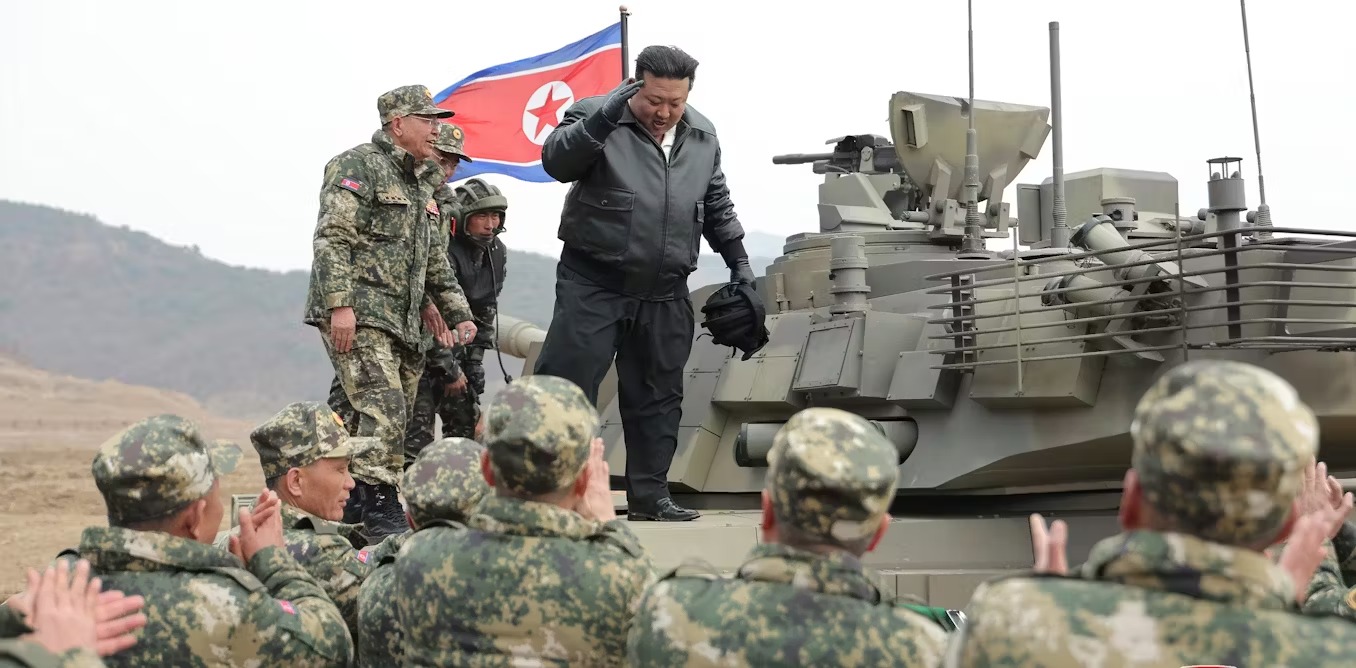
North Korea on Thursday rejected an international call to halt nuclear testing, describing the demand as a “grave political provocation” against the country as tensions over Pyongyang’s nuclear weapons program remain elevated.
A spokesperson for North Korea’s foreign ministry criticized a statement issued by ministers from the Friends of the Comprehensive Nuclear-Test-Ban Treaty, a group comprising Australia, Canada, Finland, Germany, Japan and the Netherlands.
The ministers met in New York on Tuesday and warned that any new North Korean nuclear test would be irresponsible and unacceptable. They also urged Pyongyang to comply fully with relevant United Nations Security Council resolutions addressing its nuclear and weapons programs.
In a statement carried by North Korean state media KCNA, the foreign ministry spokesperson rejected the criticism and described North Korea as a responsible nuclear-armed state. The spokesperson accused what Pyongyang called “hostile forces” of politically provoking the country.
The response came as North Korea reinforced its position that it will not surrender its nuclear arsenal. In a separate KCNA statement earlier Thursday, Foreign Minister Choe Son Hui declared that the country’s status as a nuclear weapons state is “irreversible.”
Choe’s comments followed a separate meeting held on the sidelines of the United Nations General Assembly involving officials from the United States, South Korea and Japan. The three countries reaffirmed their commitment to the complete denuclearization of North Korea, a longstanding objective that Pyongyang continues to reject.
The renewed diplomatic dispute highlights persistent divisions between North Korea and the international community over nuclear disarmament and weapons testing.
The Comprehensive Nuclear-Test-Ban Treaty, adopted in 1996, prohibits nuclear weapon test explosions and other nuclear explosions worldwide. The agreement is intended to constrain the development of nuclear weapons and support broader global nuclear disarmament efforts.