


 ISIS Attack Near Kirkuk Kills Iraqi Policeman After US Withdrawal
  Becton Dickinson to Invest $3 Billion in U.S. Medical Manufacturing
  Flavio Bolsonaro, Lula Head to Brazil Election Runoff
  Iran Tanker Attacks Surge as Hormuz Oil Flows Near Prewar Levels
  Trump Gaza Peace Plan Stalls as Israel Retains Control
  US Army Tests Counter-Drone Technology Along Mexico Border
  Rapidus Seeks Chip Customers as Japan Pushes 2nm Semiconductor Revival
  North Korea Slams US Taiwan Arms Sales, Reaffirms Russia Support
  Ethiopia-Tigray Fighting Intensifies as Airstrikes Kill 17
  Ukraine Faces $56 Billion Budget Gap as War Costs Soar
  Trump Orders Firing Squad Execution for Fort Hood Gunman
  Trump Offers US Help to Russia After Plague Lab Worker Dies
  Flavio Bolsonaro Surges as Family Scores Brazil Election Comeback
  US DOT Ends Airline Privacy Review Without Enforcement
  France Student Protests Intensify Nationwide
  OpenAI, Anthropic Back Mandatory AI Breach Reporting in Australia
  Mexico Seeks US Evidence After Border Gunfire Claim


 Add as a preferred source on Google
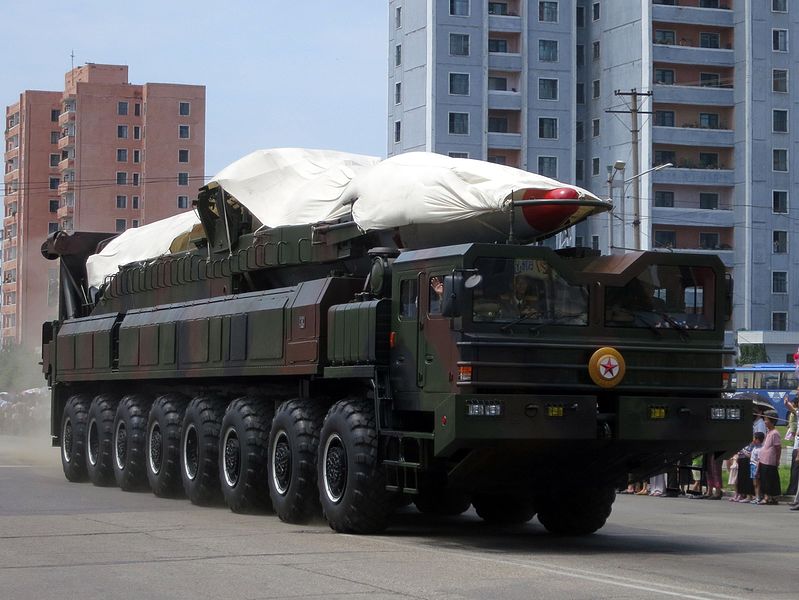
North Korea has moved ahead with bolstering its defenses through the recent multiple test launches they conducted. Pyongyang has carried out what would be its seventh test launch of a possible missile this month.
South Korea’s Joint Chiefs of Staff reported over the weekend that North Korea has launched yet another suspected missile into the sea Sunday. The latest launch would mark its seventh and is suspected of being an intermediate-range single ballistic missile from North Korea’s Jagang province toward the ocean off the east coast. Japan has also reported that North Korea launched a possible ballistic missile into the waters.
This would not only be the seventh test, but it would also be the largest missile test since 2017. This is because the suspected missile has not been tested by North Korea since that time, according to South Korea’s National Security Council, which held an emergency meeting presided by President Moon Jae-in.
The recent launch would bring Pyongyang closer to completely scrapping out its self-imposed ban on testing long-range intercontinental ballistic missiles, according to the South Korean leader. Moon also noted that this month’s missile tests are similar to the tensions in 2017, with North Korea conducting test launches of its largest missiles, some of which hit Japan.
North Korean leader Kim Jong-un has said that he no longer abides by the self-imposed moratorium, which also included a halt to nuclear weapon tests and was announced in 2018 in the midst of diplomacy summits with the US under Donald Trump. North Korean officials have suggested that they could restart the testing activities as the US and its allies did not show any signs of halting their “hostile policies.”
Following the reports of suspected missiles, North Korea has confirmed through its state media that it tested its Hwasong-12 mid-range ballistic missile.
“The inspection firing test was conducted for the purpose of selectively inspecting the ground-to-ground mid-range long-range ballistic missile Hwasong-12 and verifying the overall accuracy of this weapon system,” said North Korean state media outlet KCNA.
Pyongyang previously said that its Hwasong-12 missiles are capable of carrying large nuclear warheads. KCNA went on to report that the recent Hwasong-12 test was conducted in a way to ensure the safety of neighboring countries and the test warhead had a camera that took photos while it was in space.







