


 BlackRock CEO Warns Data Center Ban Could Trigger US Recession
  Trump Defends Russian Diesel Deal Amid US Sanctions Backlash
  Lululemon Cuts Jobs, Restructures Team After Product Quality Issues
  Arthur Hayes Announces FLOP Testnet Launch Within Weeks
  IMF Warns US Debt Crisis Needs Fiscal Action, Urges China to Boost Consumption
  Citi Upgrades Galaxy Digital Stock, Raises Price Target to $28
  Yandex Data Center Hit by Drone Strike as Russia-Ukraine Cyber Infrastructure Attacks Escalate
  OpenAI Uses AI to Uncover Hidden Recording Device, FBI Makes Arrest
  MI5 Warns of Rising Iran, Russia Threats and AI Bioweapon Risks
  Apple Intelligence Set for China Launch in December With iOS 27.3
  Trump Confirms US Intelligence Sharing With Ukraine Amid Russian Strikes
  Arm Breaches Qualcomm License Deal, Jury Awards $2
  Fed’s Williams Sees One More Rate Hike in 2026, None in 2027
  Amazon in Talks to Acquire AI Startup Decart for $7 Billion
  Italy’s Meloni Warns US-Russia Diesel Deal Could Weaken Ukraine Sanctions
  New York Times, AFP Join Coalition to Protect Content From AI
  Nvidia’s China AI Chip Market Share Falls to 34% as Huawei Gains Ground


 Add as a preferred source on Google
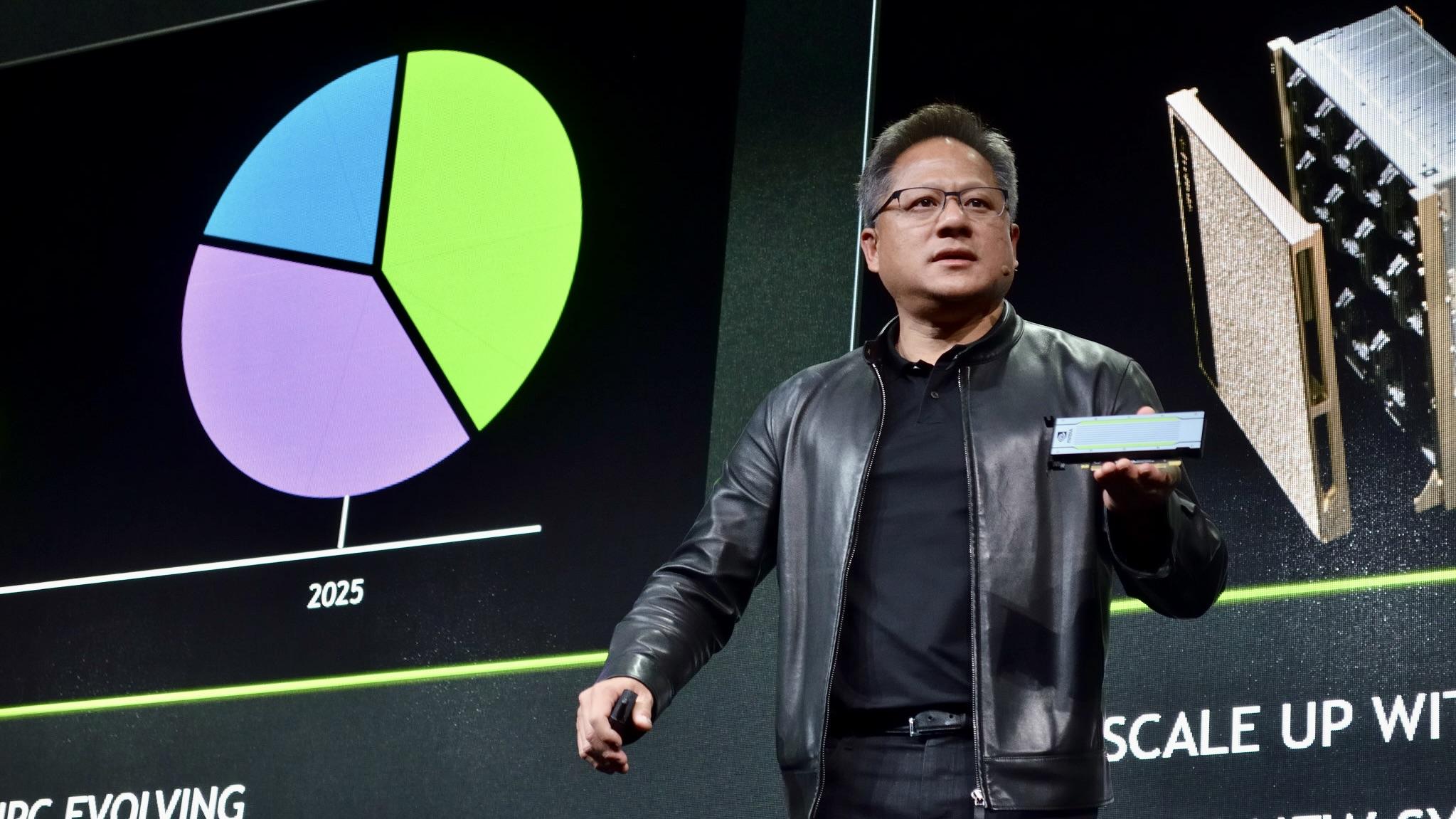
Jensen Huang, Nvidia CEO, expressed confidence that global tech collaboration will persist, even under U.S. export restrictions on advanced AI technologies introduced during Trump’s term. Speaking in Hong Kong, Huang advocated for innovation alongside policy compliance to drive progress.
Global Tech Collaboration to Continue Amid Stricter U.S. Policies
Even if the next U.S. government implements tougher export restrictions on sophisticated computer goods, worldwide cooperation in technology will persist, according to Nvidia CEO Jensen Huang, who made the statement on Saturday, Reuters reports.
The sale of American technology to China was restricted throughout the first term of President-elect Donald Trump and President Joe Biden, on the grounds of national security. This policy was maintained by Biden. Nvidia, the industry leader in chips for AI applications, had to alter its product selection in China due to the restrictions.
"Open science in global collaboration, cooperation across math and science has been around for a very long time. It is the foundation of social advancement and scientific advancement," Huang told the press while he was in Hong Kong.
Nvidia CEO Emphasizes Compliance and Innovation
According to Yahoo, the collaborative effort is "going to continue. I don't know what's going to happen in the new administration, but whatever happens, we'll balance simultaneously compliance with laws and policies, continue to advance our technology and support and serve customers all over the world."
After receiving an honorary degree in engineering from the Hong Kong University of Science and Technology, the CEO of the most valuable corporation in the world gave a speech in the financial capital.
While on campus, Huang joined Harry Sham, chair of the university council, for a fireside talk with faculty and students.
AI Factories and Energy Efficiency
Huang stated, "If the world uses more energy to power the AI factories of the world, we are a better world when that happens" in response to a question regarding the enormous energy consumption of GPUs, the components responsible for AI.
He pointed out "the goal of AI is not for training, the goal of AI is for inference." For example, he mentioned that AI has the potential to uncover novel materials for electrical storage, designs for wind turbines, and methods for storing carbon dioxide in reservoirs.
He advocated for the idea of locating artificial intelligence supercomputers in remote areas, away from people, and just off the power grid, where they could run on renewable energy.
A New Era of AI Innovation
"My hopes and dreams is that in the end, what we all see is that using energy for intelligence is the best use of energy we can imagine," said Huang.
Earlier on Saturday, after getting the honorary degree, Huang addressed the graduates and declared that "the age of AI has started" in a speech.
"A new computing era that will impact every industry and every field of science."
Encouragement for Graduates to Lead Change
The 61-year-old Huang expressed regret to the graduating class that he did not begin his profession sooner. "The whole world is reset. You're at the starting lines with everybody else. An industry is being reinvented. You now have the instruments, the instruments necessary to advance science in so many different fields," Huang remarked.
"The greatest challenges of our time, unimaginable challenges to overcome in the past, all of a sudden seem possible to tackle."







