
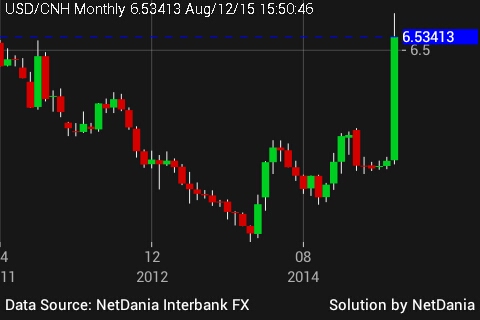
After weakening Yuan via fix by 1.9% on Tuesday, China has devalued the currency once again today by lowering the fix by 1.6%, marking largest two day moves in more than two decades.
Chinese currency devaluation has rattled markets, resulting in sharp sell offs in some commodities, commodity currencies and equity markets as global bonds posted heavy gains pushing yields lower.
Emerging market currencies have suffered, especially emerging Asian currencies including Indian Rupee, which has been one of the top performer among emerging market peers this year.
China is trying to support its ailing exports by weakening the Yuan, which has appreciated along with Dollar since last year.
However, China's move is attracting heavy criticism from US, which might prove pivotal ahead of IMF's evaluation to whether or not to add Yuan to its SDR basket.
- Leading US senator Charles Schumer said the move should be sufficient for IMF to abandon its consideration of the Chinese currency for inclusion in the basket of currencies used for special drawing rights (SDR).
- He went even further to say that allowing Yuan the reserve status would be similar to putting a fox in charge of the henhouse.
IMF committee is likely to take decision on Yuan, some time in November.
Offshore Yuan touched its weakest level since 2012, currently trading at 6.5261 against Dollar (USD/CNH).


