


 Micron Forecast Tops Estimates as AI Memory Demand Stays Strong
  SoftBank Shares Fall After $10 Billion OpenAI Investment
  Vitalik Buterin Says Hegota Could Be Ethereum’s Last Conventional Fork
  Apple CEO John Ternus Plans Major Overhaul
  TD Cowen Starts SpaceX at Buy, Sees AI Compute Driving Growth
  Polymarket Traders Bet on Trump AI Rename to ‘Super Intelligence’
  DeepSeek, Huawei Partner on Ascend AI Chip Programming Tools
  Pi Network Price Holds $0.087 as Protocol 28 Mainnet Upgrade Nears
  Trump, Tech Leaders Sign ‘Morally Binding’ AI Safety Accord
  Europe’s AI Data Centre Boom Strengthens Case for Nuclear Power
  DogeOS Launches Testnet to Bring DeFi Apps to Dogecoin
  Amazon Eyes $8 Billion Nvidia Chip Spinoff to Fund AI Expansion
  Samsung Invests $1 Billion in KKR’s Helix AI Infrastructure
  WordPress Malware Uses Ethereum to Evade Removal
  OpenAI, Anthropic CEOs Summoned to Australia AI Inquiry
  Tencent Signs $7 Billion Oracle AI Chip Lease Deal


 Add as a preferred source on Google
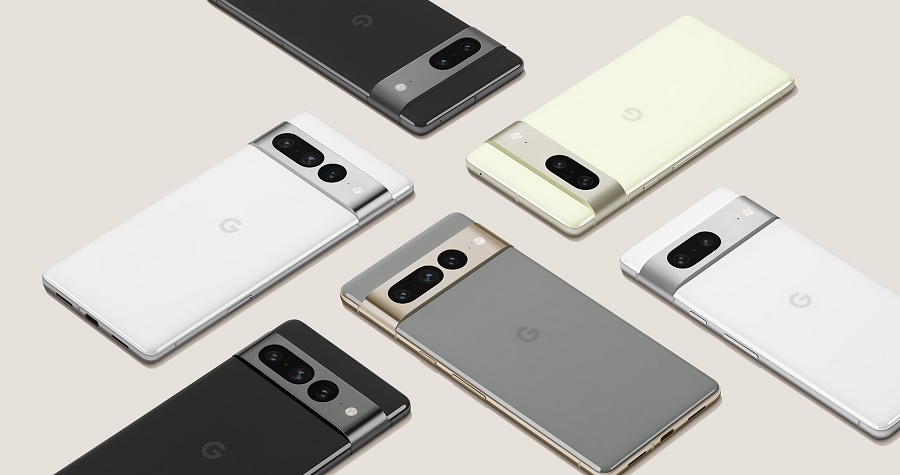
Google has continued a familiar approach to avoid leaks from spoiling its surprises by unveiling the Pixel 7 series months before it arrives in stores. While Google still left the technical specifications under wraps, several details were recently discovered that suggest the upcoming phones will have the exact display panels used on their predecessors.
The company has confirmed that it will release a two-device lineup for its flagship Pixel phone brand later this year. The early teasers also showed that there will be a few design tweaks. And 9To5Google now reports that there are also going to be minimal changes in the display specs of both Pixel 7 and Pixel 7 Pro.
An analysis of the Android Open Source Project has reportedly revealed a code that provided details on the display specs of the Pixel 7 models. The report said both devices will likely have the same Samsung panels used on Pixel 6 and Pixel 6 Pro with model numbers S6E3FC3 on Pixel 7 and S6E3HC3 on Pixel 7 Pro.
The similarities also appear to extend to other display specs. That means the Pixel 7 display will likely have FHD+ (1080 x 2400) resolution and 90Hz refresh rate, while the Pixel 7 Pro will offer QHD+ (1440 x 3120) resolution and up to 120Hz refresh rate.
Despite reusing the same panels, the Pixel 7 display is expected to be slightly smaller -- narrower by 1mm and shorter by 2mm -- than the Pixel 6. But these changes are so minute that it would not be surprising if Google would still advertise the device as having a 6.4-inch screen. Meanwhile, there are now measurement changes expected for the Pixel 7 Pro.
The same report said the Pixel 7 Pro could offer a native 1080p resolution, while the “DDIC scaling” would do the heavy lifting so the display can perform at 1440p. This move is expected to be one of the ways that Google will address battery efficiency, or it could be one of the functions of the Low Power Mode.
Aside from the technical specifications, Pixel fans will still have to wait for the Pixel 7 product launch date. Google has only said the new phones will arrive in the fall, but the company usually holds the event in October.







