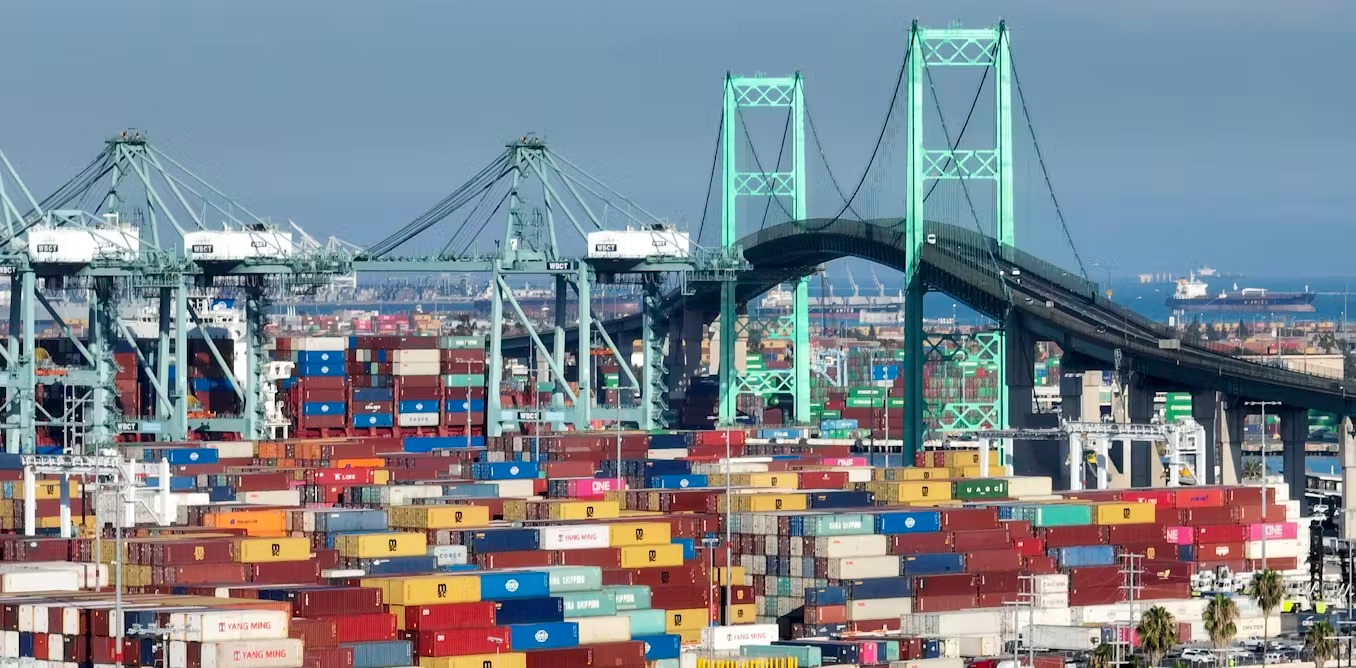
The Port of Los Angeles handled a record amount of cargo in June as importers accelerated shipments ahead of higher fuel costs and new U.S. tariffs, highlighting continued strength in U.S. trade activity despite growing global shipping challenges.
According to data released Wednesday, the Port of Los Angeles processed 1,002,734 twenty-foot equivalent units (TEUs) during June, up 12% from the same month in 2025. It marks only the third time in the port’s 118-year history that monthly cargo volume has surpassed the 1 million TEU milestone, Executive Director Gene Seroka said.
Imports remained the primary growth driver, increasing 13% year over year to 530,558 TEUs. Exports also posted a modest gain, rising 0.2% to 126,365 TEUs, reflecting resilient demand for U.S. trade despite ongoing geopolitical and economic uncertainty.
Strong cargo activity was also reported at the neighboring Port of Long Beach, which handled 779,331 TEUs in June, making it the port’s third-busiest June on record. Imports there climbed 11% compared with a year earlier, underscoring robust shipping demand across Southern California’s key trade gateways.
Nationwide, U.S. container imports increased 8.2% year over year in June, according to supply chain technology company Descartes Systems Group (TSX: DSG). The data suggests businesses are bringing in goods earlier than usual to reduce exposure to rising transportation costs and evolving U.S. trade policies.
Global supply chains continue to face pressure from geopolitical tensions. The ongoing U.S.-Israeli conflict with Iran has disrupted major shipping routes, pushing marine fuel prices higher and creating uncertainty for international freight operators. Retailers and manufacturers are increasingly concerned that elevated shipping costs and logistical disruptions could lead to shortages of critical raw materials and factory goods.
The record June cargo volumes at the Port of Los Angeles reflect how businesses are adjusting supply chain strategies to secure inventory before tariffs and higher transportation expenses further increase import costs.