Qatar urged Iran and the United States to recommit to diplomacy on Thursday as both countries exchanged fresh military strikes, raising fears that their fragile ceasefire could collapse and further destabilize the Middle East.
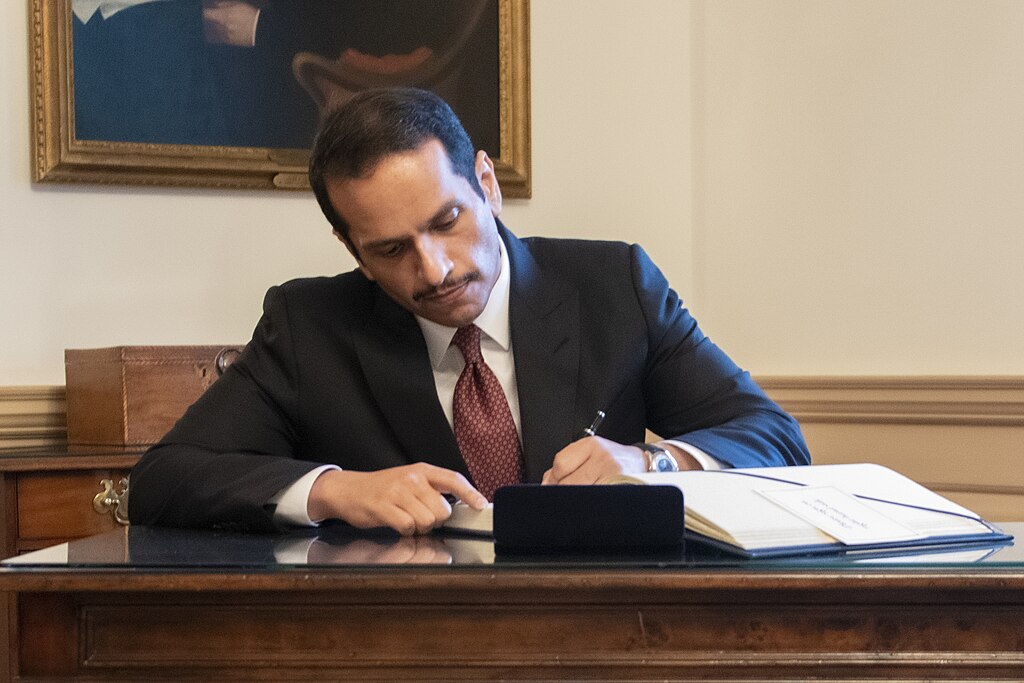
During a phone call with Iranian Foreign Minister Abbas Araghchi, Qatari Prime Minister Sheikh Mohammed bin Abdulrahman al-Thani called on both sides to implement the memorandum of understanding signed in June and pursue a diplomatic solution. Qatar, alongside Pakistan, has played a key mediating role in recent peace efforts. Al-Thani also condemned this week's attack on a Qatari tanker in the Strait of Hormuz, according to Qatar's foreign ministry.
The appeal came after the U.S. military launched another wave of strikes against Iran early Thursday. U.S. Central Command (CENTCOM) said it targeted roughly 90 military sites, including air defense systems, drone storage facilities, and coastal surveillance assets. Washington said the operation was intended to reduce Iran's ability to threaten commercial shipping following attacks on three oil tankers in the Strait of Hormuz.
Iran responded by launching strikes on what it described as U.S. military bases in Kuwait and Bahrain. The Islamic Revolutionary Guard Corps warned that additional attacks on American facilities across the Gulf would follow if the U.S. carried out further military action.
Speaking at the NATO summit in Türkiye on Wednesday, President Donald Trump suggested the ceasefire was effectively over, accusing Iran of walking away from commitments on its nuclear program after agreeing to negotiations. While Trump said he no longer wanted to deal with Tehran, he also indicated he remained open to renewed talks if Iran was willing to negotiate. He later claimed Iran had reached out seeking another agreement, although Tehran has not confirmed any such contact.
The renewed conflict has deepened uncertainty surrounding the June ceasefire, with disputes over Iran's nuclear program and control of the Strait of Hormuz continuing to hinder progress toward a permanent agreement. Tehran insists it should retain oversight of shipping routes through the strategic waterway, while Washington has rejected those demands.
Despite easing slightly on Thursday, oil prices remain above pre-conflict levels, reflecting persistent concerns that escalating tensions could disrupt global energy supplies and fuel inflation.