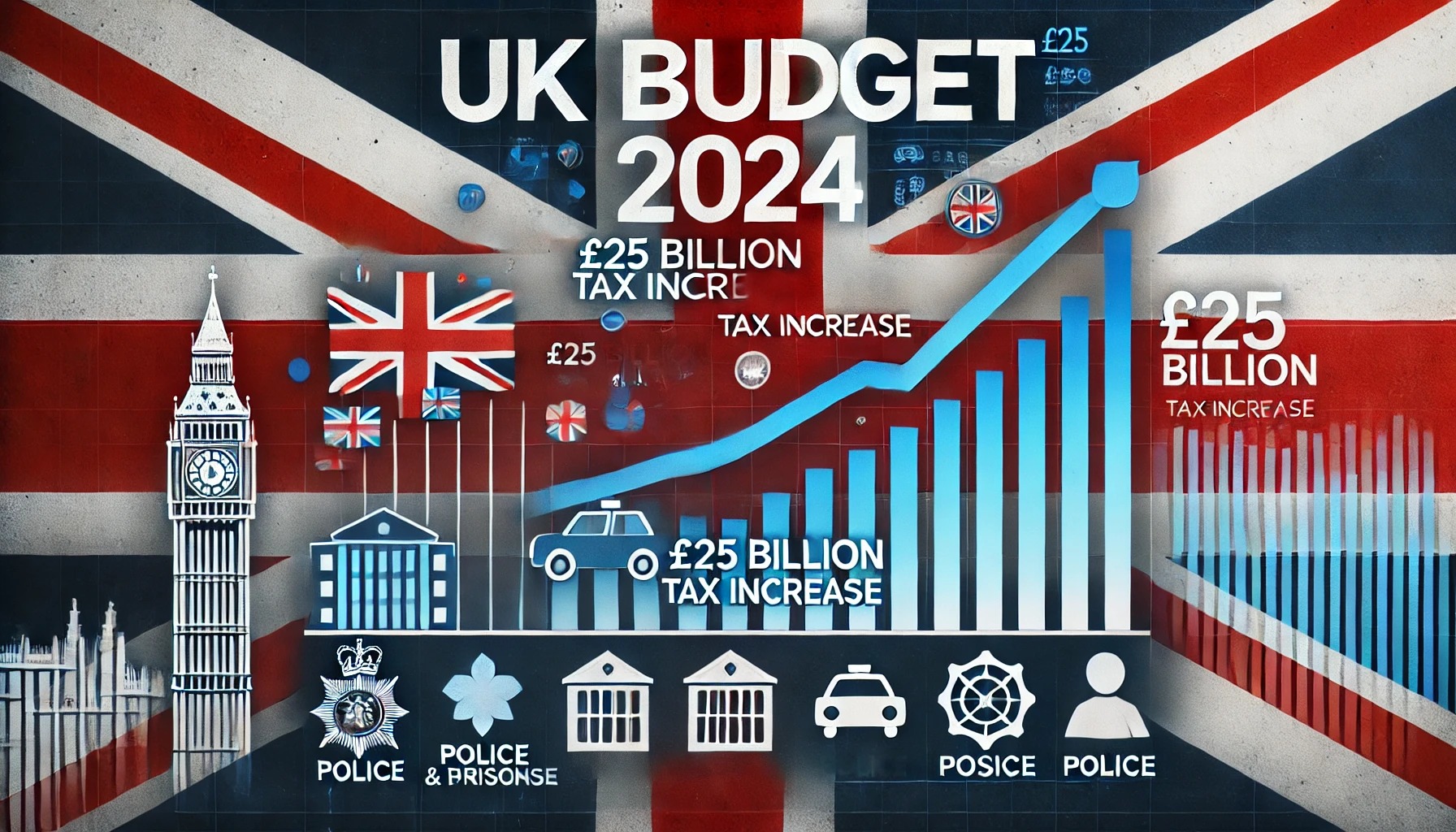
Rachel Reeves, the British finance minister, may need to introduce a £25 billion tax rise in her first budget on October 30 to strengthen critical public services, such as prisons and police, according to the Institute for Fiscal Studies (IFS). The IFS, a leading independent think tank, pointed out that significant tax increases may be required to prevent government budgets from shrinking as a share of the economy.
During Labour’s election campaign, the party outlined £9 billion in tax rises, but the IFS now suggests that more substantial tax increases will be necessary to sustain investment in public services. This proposed rise could result in taxes increasing by nearly 1% of national income.
Paul Johnson, Director of the IFS, explained, "The new chancellor is committed to increasing investment in public services. To achieve this, she will need to raise taxes, increase borrowing, or implement a combination of both."
A £25 billion tax increase would be nearly double the size of the tax rises introduced after previous government transitions in 2010 and 1997. This comes as the Labour government confronts a worse-than-expected state of public finances, as revealed by Reeves shortly after Labour’s landslide election victory in July.
Prime Minister Keir Starmer's approval ratings have taken a hit, partly due to cuts in winter fuel subsidies for pensioners, exacerbating the financial challenges the government faces.
Reeves has indicated that she will change the budget rules under which the finance ministry operates. Her plan includes targeting a balanced budget—excluding investment spending—rather than adhering to the current rule, which allows a 3% deficit overall. However, the IFS warns that redefining public debt could lead to an additional £50 billion in borrowing.
There is rising concern among foreign investors regarding these potential changes. Benjamin Nabarro, chief UK economist at Citi, remarked that adjustments to budget rules could increase foreign investors' apprehension about higher levels of public debt. This sentiment has been reflected in the recent spike in the yield premium on 30-year British government bonds over German bonds, reaching its highest level since the market instability following Liz Truss' budget in 2022.
While Reeves acknowledges the need for increased borrowing, she has also assured that any additional borrowing will be managed with strict “guardrails” to ensure that financial markets remain stable and confident. "Having a very robust process of policing is crucial in assuring gilt markets that borrowing isn't being misused," Nabarro added.
Conclusion
As Rachel Reeves prepares for her first budget announcement, the possibility of a £25 billion tax increase highlights the balancing act required to maintain public services while managing the nation's financial health. Investors, policymakers, and the public will closely monitor the government’s approach to these critical economic challenges.