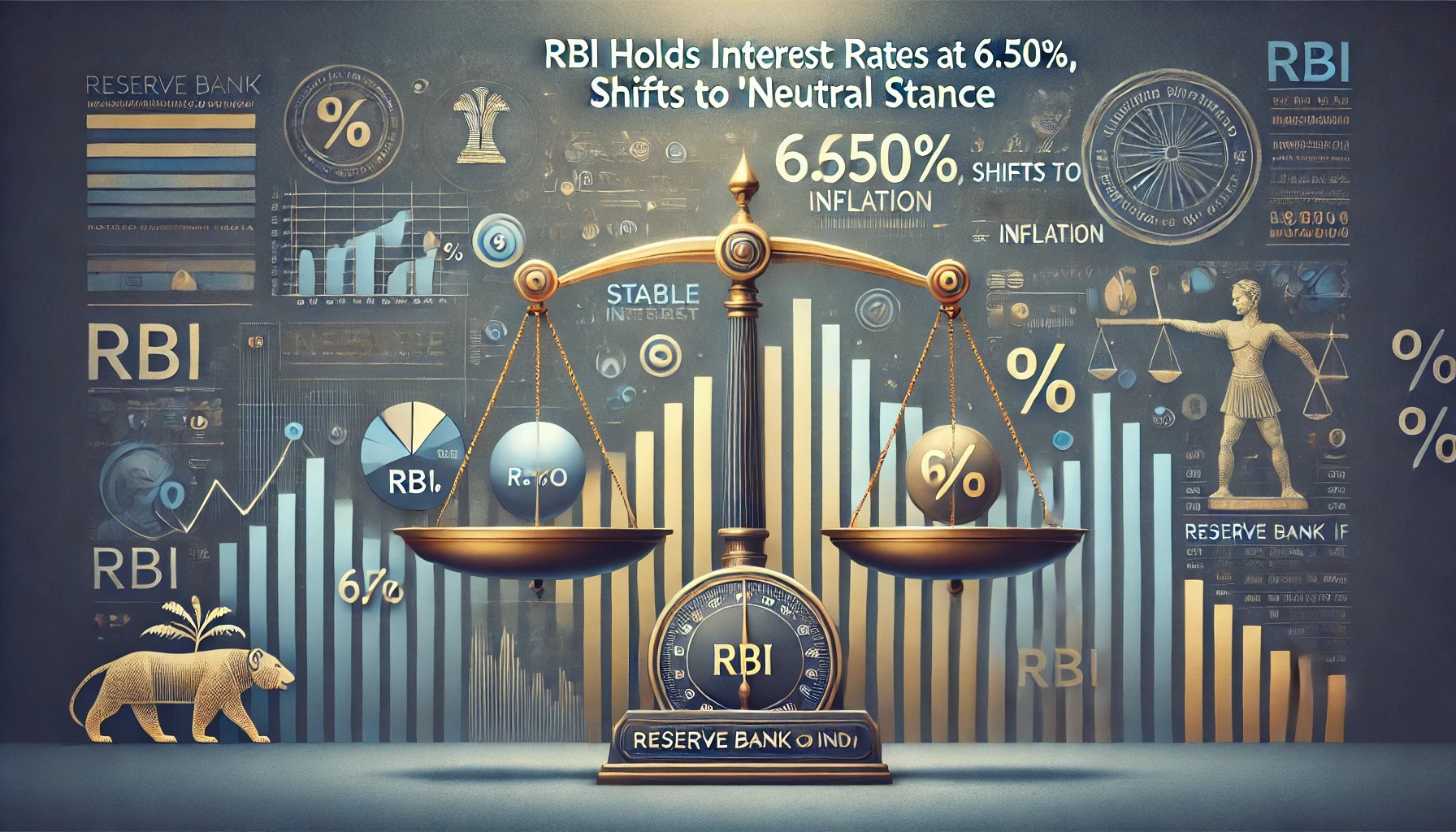
The Reserve Bank of India (RBI) announced on Wednesday that it will keep its key interest rate unchanged at 6.50%, marking the tenth consecutive meeting with no rate adjustment. However, the central bank's Monetary Policy Committee (MPC) shifted its stance from "withdrawal of accommodation" to a more flexible "neutral" approach, indicating a potential for future rate cuts as the economy begins to show early signs of a slowdown.
Key Interest Rate Unchanged at 6.50%
The MPC, comprised of three members from the RBI and three external experts, voted unanimously to maintain the repo rate at 6.50%. This move was widely anticipated, with 80% of economists in a Reuters poll predicting that rates would remain unchanged. The last time the RBI altered rates was in February 2023, when it raised the policy rate to its current level.
Policy Shift: "Neutral" Stance Signals Flexibility
In a significant shift, the committee updated its policy stance to "neutral," signaling potential rate cuts in the near future if inflation remains under control. This change provides the RBI with greater flexibility to adjust rates as needed to support economic growth while keeping inflation in check. The MPC emphasized its commitment to achieving a durable alignment of inflation with the central bank’s 4% target, while also supporting sustainable economic growth.
Inflation and Growth Outlook
India's inflation remained below the RBI's 4% target for the second consecutive month, coming in at 3.65% in August, slightly higher than the 3.60% recorded in July. Despite these relatively low inflation figures, concerns about inflationary pressures remain, particularly due to rising geopolitical tensions in the Middle East, which could impact the inflation trajectory in the coming months.
On the growth front, warning signs are starting to appear. India's overall economic growth slowed to 6.7% in the June quarter. Additionally, high-frequency indicators suggest a potential economic downturn. The manufacturing Purchasing Managers’ Index (PMI) dropped to an eight-month low in September and the services PMI declined to a 10-month low during the same period.
RBI's Cautious Optimism
While the RBI's decision to maintain the key interest rate was widely expected, the shift to a "neutral" stance reflects the central bank's cautious approach. The RBI is preparing to respond to changing economic conditions, with rate cuts potentially on the horizon if the growth outlook worsens or inflation remains within acceptable levels.
By closely monitoring inflation and growth indicators, the RBI aims to navigate the delicate balance between supporting economic expansion and ensuring inflation stays aligned with its targets.