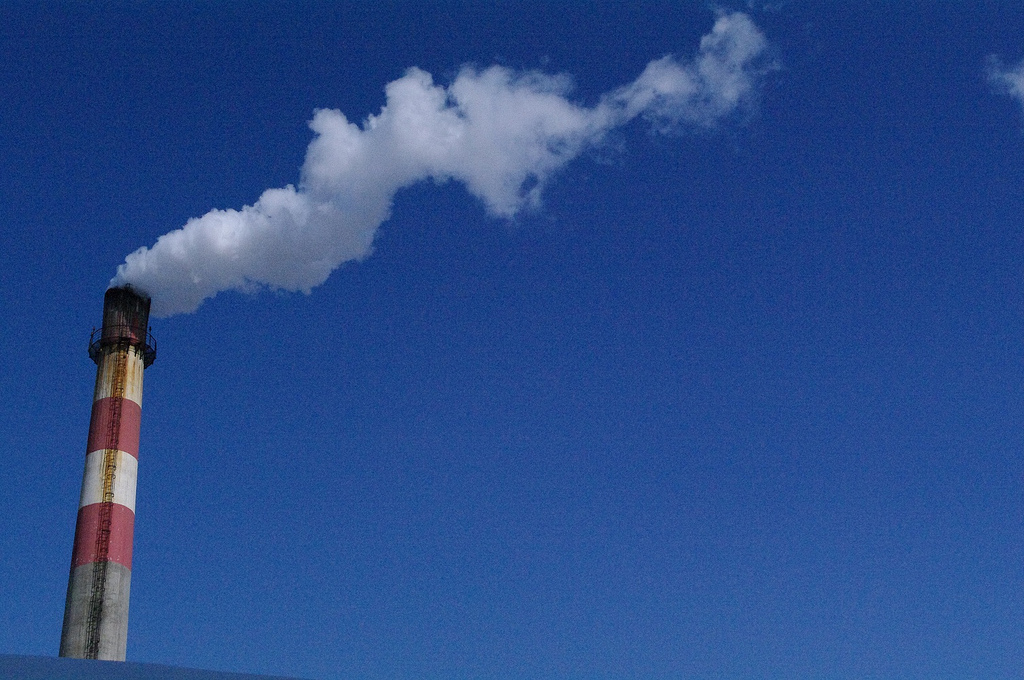
Greenhouse gasses like carbon dioxide and methane are what causes the heat from the sun to get trapped within the earth’s atmosphere, thus causing global warming. Now, there’s a new scientific method called a “super-dry” reaction, which can change these two greenhouse gasses into more useful chemicals. Could this be the first step in finally putting a stop to climate change?
The technique was created by researchers from Belgium, E&T reports, where CO2 and methane could be transformed to pose less danger to the world. The technique is called “super-dry” because it doesn’t involve the use of water or any kind of moist compound, which is usually the case for transformative chemical reactions. The findings and the methodology are explained in detail in the most recent Science magazine issue.
However, the gist of it is using a catalyst using nickel in order to induce a reaction between methane and CO2. The CO2 is then absorbed during the reaction by Calcium Oxide, followed by the use of iron oxide, which is basically the solid oxygen container. According to Lukas Buelens of the Ghent University, the lead author of the study, the resulting CO is rendered less harmful and is actually a component of numerous other chemicals.
“With this process, we intensify the conversion of CO2 by making maximal use of CH4 as reducing gas,” Buelens said. “The generated CO can be used directly or combined with a green H2 source for the production of chemicals or fuels.”
Through the use of “super-dry” reaction, the results have economic and purity benefits, Phys.org reports. Getting the useful chemicals in the process doesn’t have to involve more expensive stocks because CO2 is removed. The Calcium carbonate formation also serves to combine with other chemicals that involve a more favorable process. In essence, everyone wins thanks to this new technique.