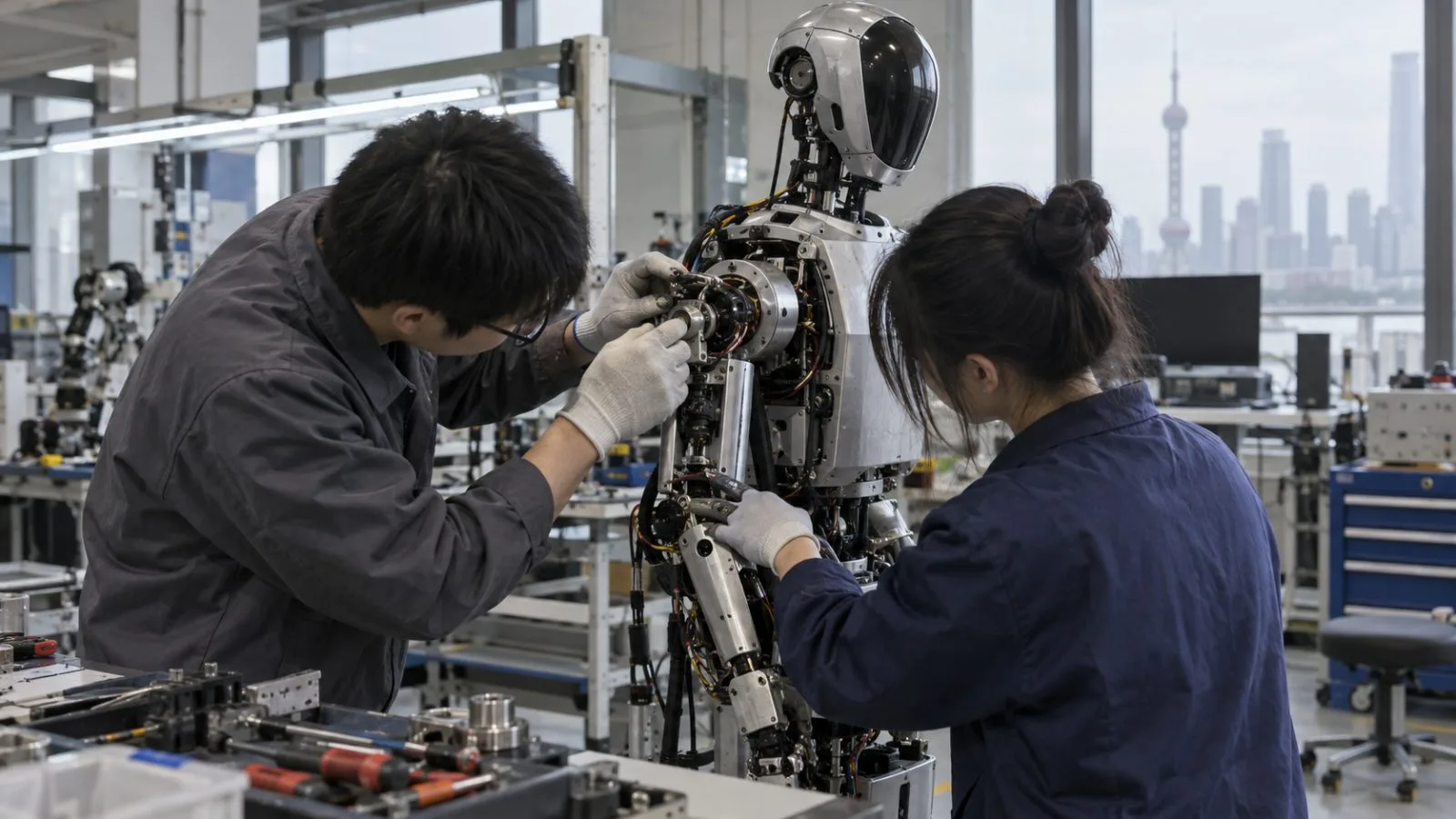
RoboParty has opened a public development stack for its RP1 (ROBOTO 01) humanoid, giving researchers access to hardware designs and software resources for robotics and embodied-AI work. The company’s repositories cover robot structure, electronics, actuator modules, firmware, robot models and training tools.
The hardware repository includes mechanical source files and drawings, PCB production data, wiring information and bills of materials. RoboParty’s product page lists the standard RP1 at 1.35 meters tall with 24 active degrees of freedom, and the RP1 Pro at the same height with 30. The company lists a three-hour runtime for both configurations.
The project is built around RoboParty’s ROMOMO joint actuators. The company’s repository lists a peak torque of 160 N·m for its RMM10062-2E module. RoboParty says opening the underlying designs and control resources can let developers inspect and modify more of the systems involved in a robot’s movement.
“We believe the future of embodied AI should not be defined by just a handful of closed systems,” said Yi Huang, founder of RoboParty.
The release’s software status is less clear. RoboParty’s RP1 documentation says the 24-axis configuration connects training, simulation-transfer checks and physical deployment, but the deployment repository still labels its RP1 deployment guide “Coming soon.” The documentation also says a default policy and dedicated training task for the 28-axis model have not been published.
RP1 follows RoboParty’s RPO project, launched in January 2026. The company said RPO had collected more than 2,600 GitHub stars by the RP1 announcement. An earlier company announcement said broader RP1 hardware and software releases, along with a mass-production program, were planned for later in the fourth quarter of 2026.