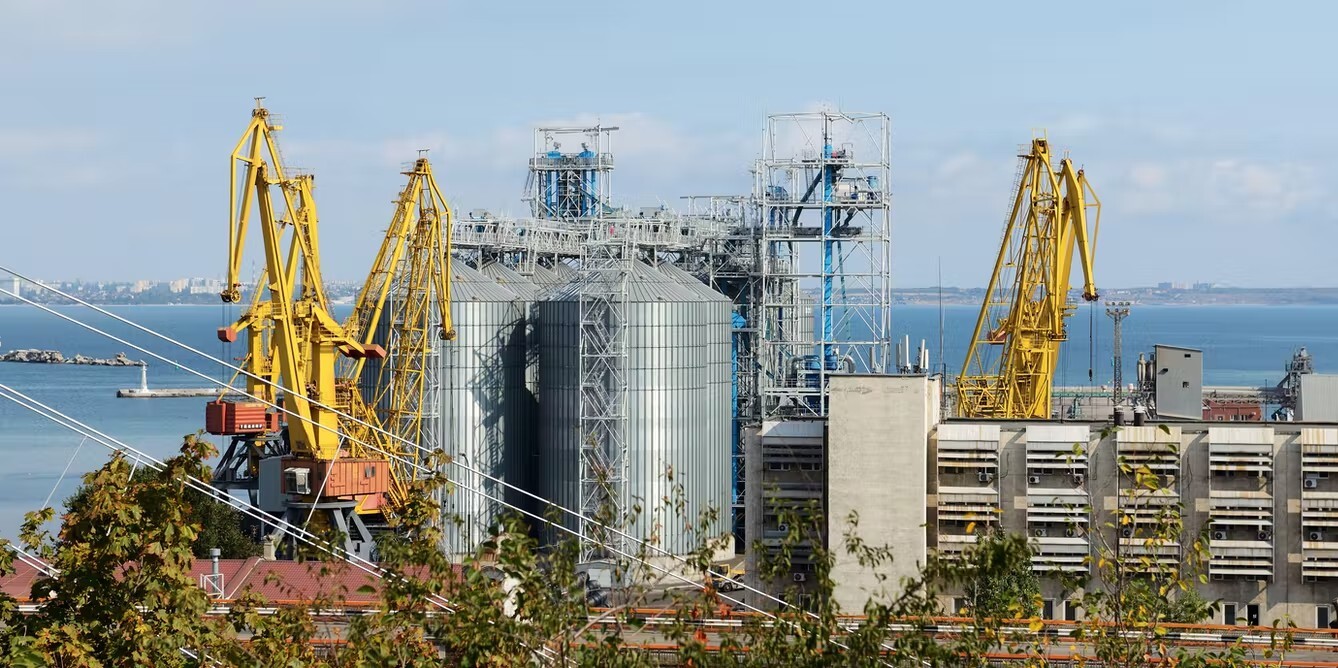
A Russian missile attack late on Friday struck critical port infrastructure near Ukraine’s Black Sea port city of Odesa, killing at least seven people and injuring 15 others, according to Ukrainian officials. The attack underscores the growing intensity of Russian strikes on Ukraine’s southern regions, particularly areas vital to grain exports and international trade.
Ukraine’s Deputy Prime Minister Oleksiy Kuleba said the assault involved ballistic missiles and targeted port facilities in the Odesa region. Regional governor Oleh Kiper confirmed the casualties, noting that the figures were based on preliminary assessments. A source familiar with the incident said the strike hit Pivdennyi, one of three major ports serving the Odesa area and a key hub for Ukrainian exports.
Odesa has remained a strategic focal point since Russia launched its full-scale invasion of Ukraine in February 2022. As a major gateway for grain, agricultural products, and other commodities, the city and its surrounding infrastructure have been repeatedly targeted. In recent days, the frequency and intensity of attacks have increased, often leading to widespread and prolonged power outages that disrupt daily life and economic activity.
The latest strike follows another attack on Thursday that damaged a bridge southwest of Odesa. That bridge is a crucial transport link between the city and the Danube River port of Reni, as well as a key route for border crossings into Moldova and Romania. The damage has complicated logistics, slowed cross-border movement, and created significant delays for both residents and commercial traffic.
Prime Minister Yulia Svyrydenko said the Ukrainian government is working to maintain smooth travel by road and rail for civilians and business vehicles despite the disruptions. Kuleba added that Ukraine is coordinating closely with Moldovan authorities to identify alternative routes that would allow trucks and passengers to bypass the affected areas and continue crossing the border.
In Moldova, officials have established temporary camps at border checkpoints to provide food and shelter for travelers facing delays. The measures highlight the broader regional impact of the conflict, as infrastructure attacks in southern Ukraine continue to ripple across neighboring countries and vital trade corridors.