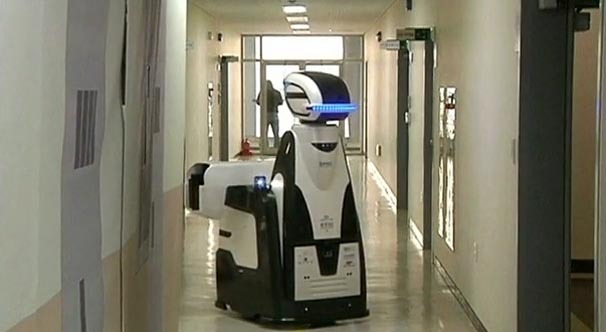
South Korea will allocate 194.4 billion won for the development of robot technology next year, up 32 percent from 2020, to have robots play bigger roles assisting workers through 2022, and have them operate autonomously by 2026.
The country plans to lift a set of regulations to pave the way for local firms to develop customized robots for four major areas, namely the industry, commerce, medical, and public sectors.
South Korea's robot industry is expected to reach 20 trillion won in 2025, up from around 5.8 trillion won in 2018, to become among the world's top four players.
The number of local professional robot companies could increase to 20 from just six in 2018.
The country has already kicked off efforts to revise 33 sets of related regulations in different industries.
According to Prime Minister Chung Sye-kyun, South Korea will adjust unnecessary regulations that may hinder the utilization of robots in different industries.
Among the regulations to be introduced are those allowing self-driving delivery robots to run on sidewalks by 2025, providing subsidies on the acquisition of caretaker robots by 2024, setting new rules for valet parking robots, and establishing safety standards for robots deployed in disinfection efforts.