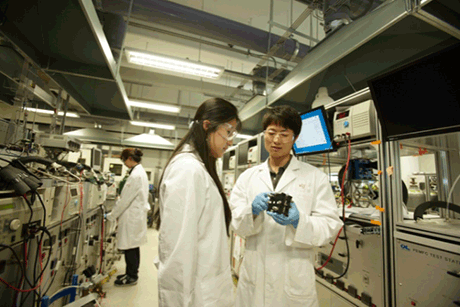
The Korea Institute of Science and Technology has developed a technology that uses photovoltaic energy for producing hydrogen peroxide, replacing a thermochemical process that requires high energy and creates environmental issues.
The thermochemically produced organic solution was used by the study team to create a photocatalytic reaction solution, which improved the photocatalyst's capacity for oxygen reduction.
The research team employed solar energy to manage the photocatalyst and organic solution, and they were able to produce 5.3 percent hydrogen peroxide per unit hour and a gram of photocatalyst, which is five times more than the minimal industrial output standard.


Nvidia Develops New Location-Verification Technology for AI Chips
SoftBank Shares Slide as Oracle’s AI Spending Plans Fuel Market Jitters
SK Hynix Considers U.S. ADR Listing to Boost Shareholder Value Amid Rising AI Chip Demand
LA fires: Fast wildfires are more destructive and harder to contain
JD.com Pledges 22 Billion Yuan Housing Support for Couriers as China’s Instant Retail Competition Heats Up
Kennedy Sets September Deadline to Uncover Autism Causes Amid Controversy
Moore Threads Stock Slides After Risk Warning Despite 600% Surge Since IPO
Trump’s Approval of AI Chip Sales to China Triggers Bipartisan National Security Concerns
Fed Near Neutral Signals Caution Ahead, Shifting Focus to Fixed Income in 2026
Lab-grown meat: you may find it icky, but it could drive forward medical research
Rise of the Zombie Bugs takes readers on a jaw-dropping tour of the parasite world
Is space worth the cost? Accounting experts say its value can’t be found in spreadsheets
The UK is surprisingly short of water – but more reservoirs aren’t the answer
Modi and Trump Hold Phone Call as India Seeks Relief From U.S. Tariffs Over Russian Oil Trade
ANZ Faces Legal Battle as Former CEO Shayne Elliott Sues Over A$13.5 Million Bonus Dispute 


