At a Varanasi symposium Monday, Nov. 2, economist Jeffrey D. Sachs tied India’s projected output growth to a multipolar world, while news reports differed on his forecast of its economic rank by 2100.
The Economic Times reported Sachs predicted India would become the world’s largest economy by 2100, while NDTV Profit described that outcome as a possibility. The Adani Foundation’s account of his remarks gives output-share projections but does not state that India will rank first.
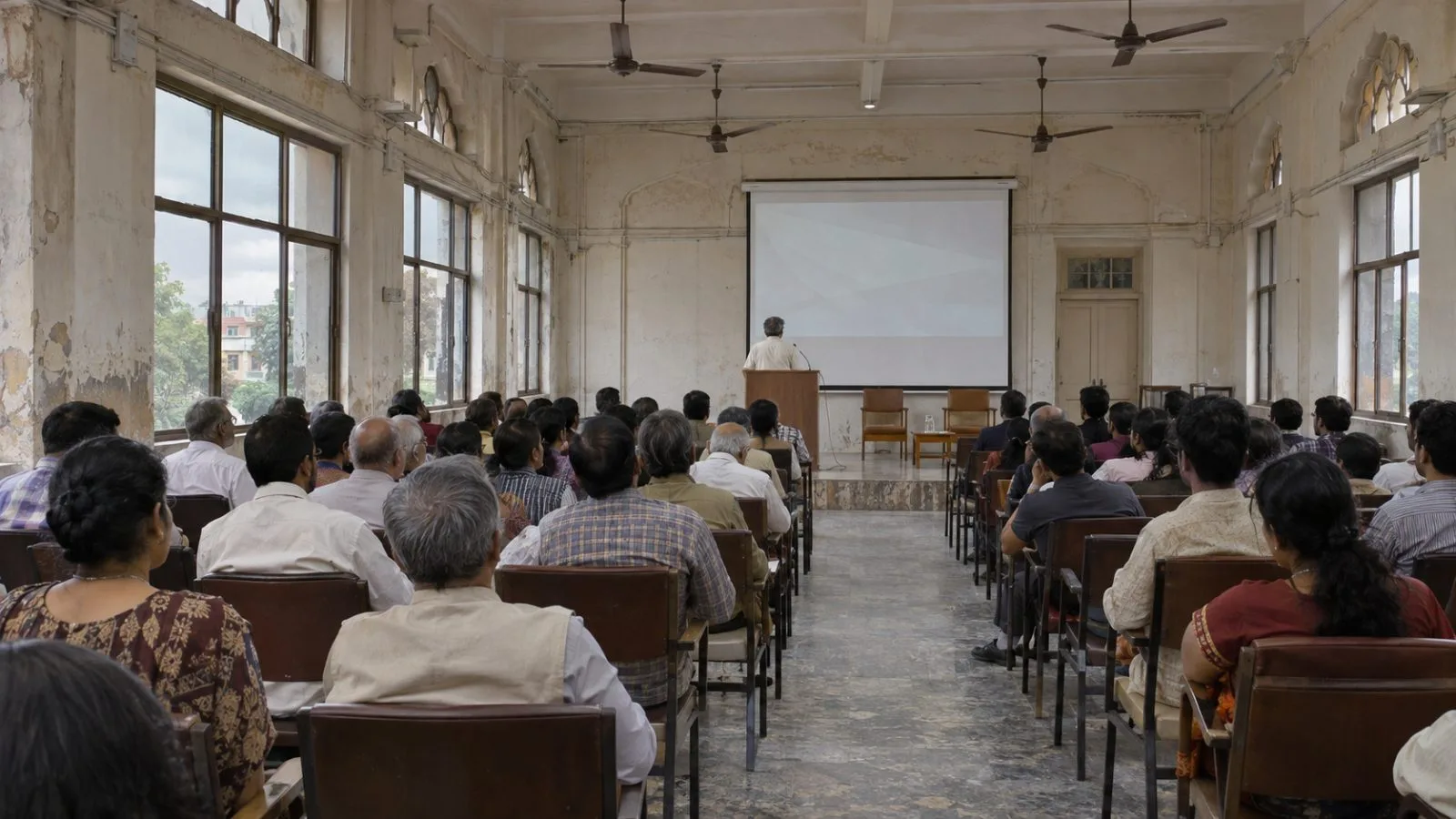
The event was the World Symposium on “Ancient Wisdom for Modern Challenges.” The Foundation titled Sachs’ address “The Return of a Multipolar World” and identified him as president of the UN Sustainable Development Solutions Network and director of Columbia University’s Center for Sustainable Development.
In its account, the Foundation said Sachs traced India’s share of global output at 5.2% in 2000 and 8.5% in 2026, then projected it would reach 13.1% in 2050 and 15.1% in 2100. It also said the United States, Canada and Europe together would see their share fall to 13.7% by 2100.
NDTV Profit reported that Sachs put the projections in historical context: India and China each accounted for about 20% of global production in 1700, compared with Europe’s 24%. By 1950, the United States and Europe together accounted for 56%, while India and China were below 10%, the outlet reported.
The United Nations’ World Population Prospects 2024 projects India’s population at 1.505 billion in 2100 and China’s at 633 million, or about 2.4 times as many people in India. That demographic projection provides context for the population comparison reported by the outlets, but does not establish which country will have the largest economy.
The Economic Times quoted Sachs as saying, “No one region, no one country will dominate.”