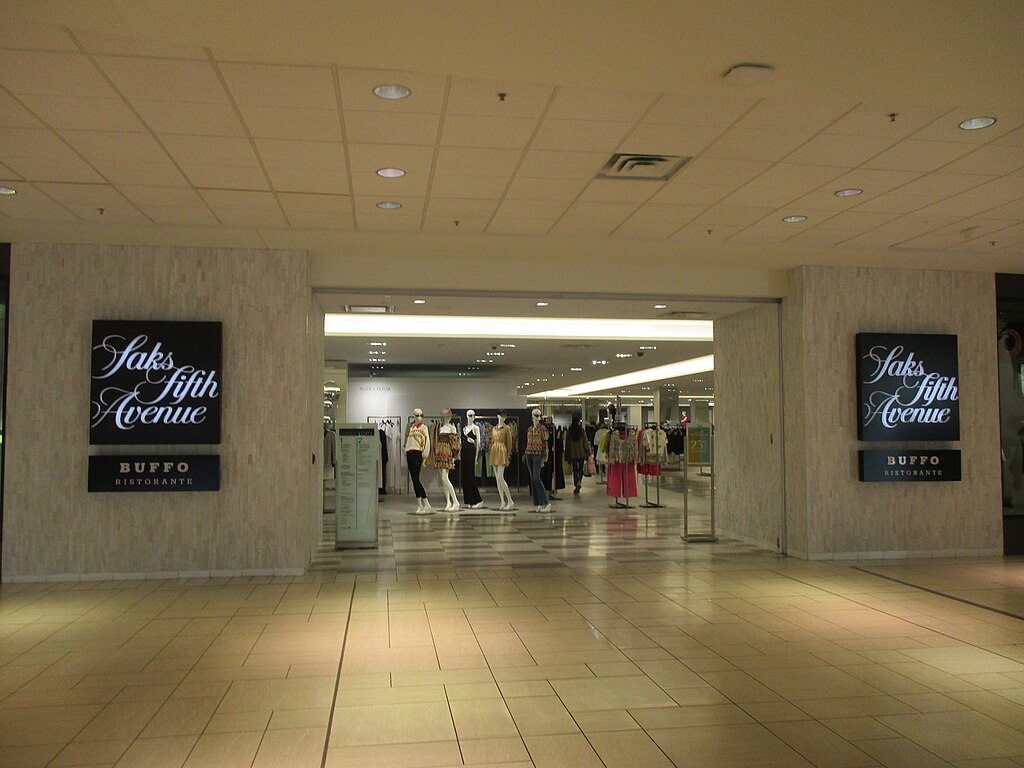
High-end department store conglomerate Saks Global has filed for U.S. bankruptcy protection, marking one of the largest retail collapses since the COVID-19 pandemic and raising fresh concerns about the future of luxury retail in the United States. According to court documents filed late Tuesday in the U.S. Bankruptcy Court in Houston, Texas, Saks Fifth Avenue—an affiliate of Saks Global—reported assets and liabilities ranging between $1 billion and $10 billion.
The bankruptcy filing comes barely a year after a major industry shake-up that brought iconic luxury retailers Saks Fifth Avenue, Bergdorf Goodman, and Neiman Marcus under one corporate umbrella. That consolidation, completed in 2024 by parent company Hudson’s Bay, was designed to create scale in an increasingly competitive market. The $2.7 billion merger relied heavily on roughly $2 billion in debt financing, alongside equity investments from major players such as Amazon, Salesforce, and Authentic Brands, all of which were listed as equity investors in the court filing.
Saks Global declined to provide additional comment following the filing. However, sources familiar with the matter previously told Reuters that the company was close to securing a $1.75 billion financing package aimed at keeping stores operational during the bankruptcy process. The proposed deal includes a $1 billion debtor-in-possession loan led by Pentwater Capital Management and Bracebridge Capital, an additional $250 million asset-backed loan from banks, and up to $500 million in post-bankruptcy financing contingent on a successful exit from Chapter 11.
Once synonymous with luxury and favored by celebrities from Gary Cooper to Grace Kelly, Saks has struggled in recent years. The post-pandemic shift toward e-commerce, combined with luxury brands increasingly selling directly through their own stores and websites, eroded the department store’s traditional business model.
The bankruptcy has also placed strain on luxury suppliers. Court documents list major unsecured creditors including Chanel, Gucci owner Kering with claims of approximately $136 million and $60 million respectively, and LVMH with about $26 million. In total, Saks Global estimates it owes money to between 10,001 and 25,000 creditors, underscoring the broad impact of its financial collapse on the luxury fashion ecosystem.