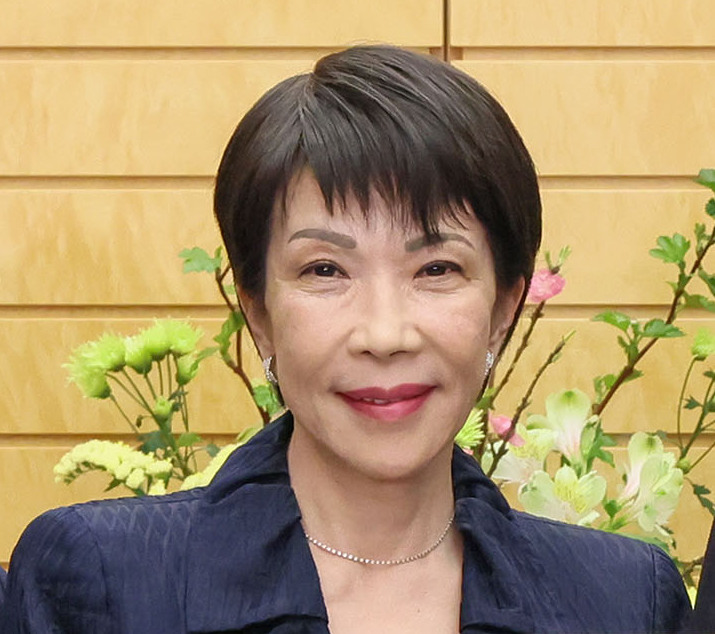
Sanae Takaichi, a leading contender to become Japan’s next prime minister and potentially its first female leader, has outlined a bold economic strategy centered on what she calls “crisis management investment.” Speaking through a commentary to the Hudson Institute, Takaichi stressed the need for proactive fiscal policies to strengthen Japan’s resilience in critical sectors while addressing the country’s long-term growth challenges.
Takaichi emphasized that while short-term stimulus remains necessary to ease the burden of rising living costs, Japan’s more fundamental challenge lies in its persistently low growth potential. To tackle this, she proposed a framework that combines government, business, and academic collaboration to drive strategic investments in sectors vital to Japan’s national and economic security.
Her plan focuses on funneling state-backed financial support into areas including artificial intelligence (AI), semiconductors, nuclear fusion, biotechnology, materials science, advanced medicine, and defense. Takaichi argued that strengthening these industries would not only reduce risks tied to food, energy, and security vulnerabilities but also generate a sustainable cycle of innovation and growth. “The core of this framework is crisis management investment,” she said, stressing that fiscal support must be viewed as a tool for risk mitigation and long-term competitiveness.
Known for her advocacy of large-scale fiscal spending, Takaichi sought to reassure critics by highlighting her commitment to fiscal sustainability. She pledged that her administration would carefully monitor financial markets, maintain discipline, and work toward stabilizing Japan’s high debt-to-GDP ratio while still supporting forward-looking investments.
Takaichi is considered a frontrunner in the ruling party’s leadership race scheduled for Saturday, which will decide the successor to Prime Minister Shigeru Ishiba, who recently announced his decision to step down. Her proposal positions her as a candidate seeking to balance immediate economic relief with strategic growth policies aimed at securing Japan’s future in an era of global uncertainty.