
Saudi Arabia in June increased oil production by 200,000 barrels per day to 10.6 million barrels per day as it continues to pursue its strategy to flood the oil market in a bid to push high cost producers out of the market.
Saudi Arabia notably has lowest production cost per barrel in the world around $20/barrel.
This strategy has seen some success as it toughened the situation for North African producers. However, when it comes to US, the strategy has seen very limited or no success. So far, lower oil price has helped to push down number of oil rigs operating in US and small shale oil companies to bankruptcies. However to prevent US's ever rising production it has failed monumentally so far.
- Low cost of switching on and off, any shale oil rigs makes US producers the swing producers. Companies can easily start the production or close it down relatively fast, efficiently and at a very minimal cost.
- After long seven months of consecutive decline, last week number of operating rigs in US rose by 12. This week another 5 become operative, which brings total active rigs at 645, still down by 918 rigs from a year ago.
In spite of sharp decline in number of operating rigs and fall in rate of rise in production, overall production growth is likely to remain positive in US.
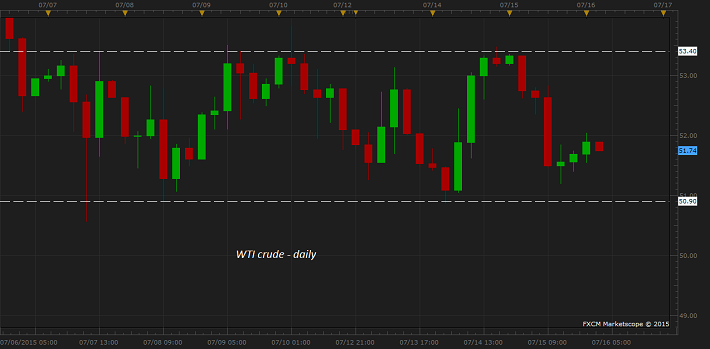
WTI is down sharply, currently trading at $51.8/barrel. WTI has found support around $51 area, whereas resistance lies close to $54. A downside break as of now seems likely.


