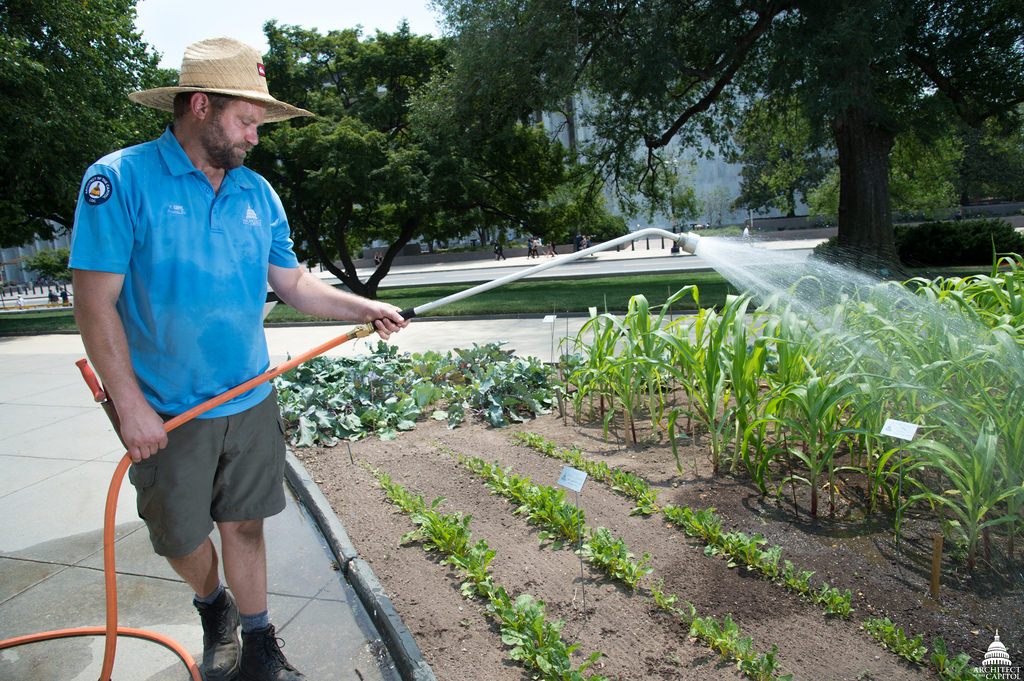
Plants need a lot of water in order to grow healthy, which is why it can be incredibly difficult for farmers when the dry seasons hit. Things get even worse if there are droughts, with the problems also affecting others in the population once resources are diverted to keeping crops alive. With the recent success that scientists saw in making plants more water efficient, this might change soon.
As part of a global initiative called Realizing Increased Photosynthetic Efficiency (RIPE), scientists saw success in making plants more water efficient by modifying a single gene. The researchers published their findings in the Nature Communications journal, noting how this development could help produce crops at a more robust rate while lowering water consumption across the board.
Leading the project is Katarzyna Glowacka. A Carl R. Woese Institute for Genomic Biology (IGB) postdoctoral researcher at the University of Illinois at Urbana-Champaign, Glowacka and her team modified a photosynthetic protein known as the Photosystem II Subunit S (PsbS) in tobacco.
By doing so, the researchers were basically able to trick plants into partially closing openings called stomata. This results in photosynthesis while keeping the loss of water at a minimum.
“Plants with increased PsbS expression show less stomatal opening in response to light, resulting in a 25% reduction in water loss per CO2 assimilated under field conditions. Since the role of PsbS is universal across higher plants, this manipulation should be effective across all crops,” the paper reads.
As Futurism notes, efforts to increase the efficiency of growing plants, boosting yield, and improving resistance to both environmental and biological threats have been escalating. Some research groups have already seen some success in increasing the yield of crops like tomato using the gene-editing tool called CRISPR.
These advancements have become the beacon of hope in a world that is fast heading towards disaster. With climate change and overpopulation looming over the horizon, food shortage and limited natural resources are feared to spark a war in the decades to come.