


 FDA Pilot Program Eases Rules for Nicotine Pouch Makers
  Is space worth the cost? Accounting experts say its value can’t be found in spreadsheets
  Jared Isaacman Confirmed as NASA Administrator, Becomes 15th Leader of U.S. Space Agency
  Blue Origin New Glenn Explosion Could Delay Launch Operations Until 2028
  Cogent Biosciences Soars 120% on Breakthrough Phase 3 Results for Bezuclastinib in GIST Treatment
  China vs. NASA: The New Moon Race and What's at Stake by 2030
  Trump Administration Releases New UFO Files and Apollo Mission Records
  SpaceX Prioritizes Moon Mission Before Mars as Starship Development Accelerates
  SpaceX Delays Starship V3 Launch Ahead of Potential Record IPO
  Tabletop particle accelerator could transform medicine and materials science
  SpaceX’s Starship Completes 11th Test Flight, Paving Way for Moon and Mars Missions


 Add as a preferred source on Google
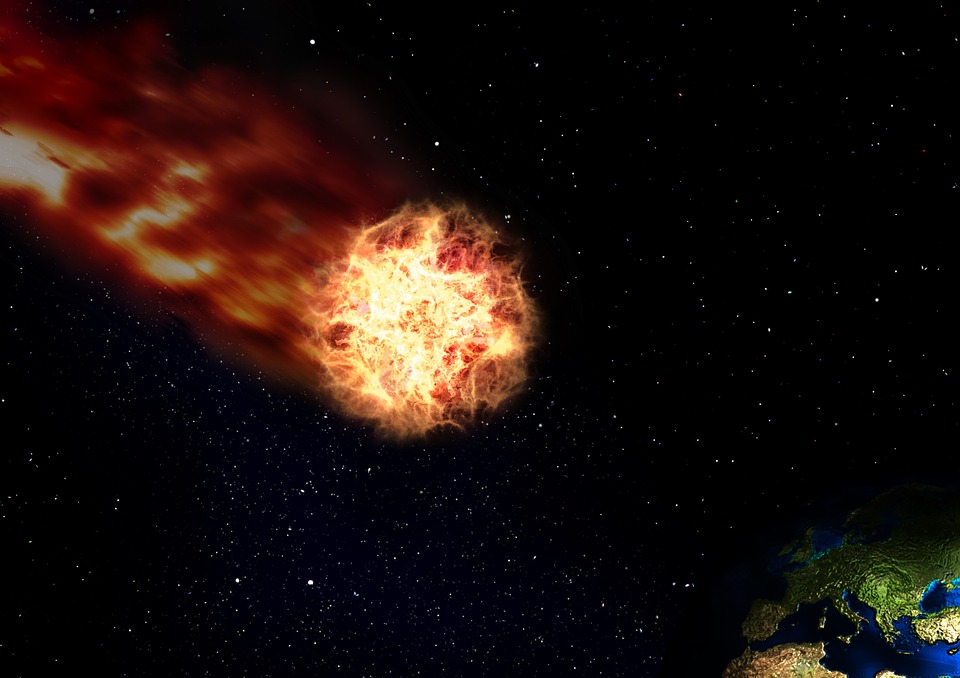
In 2019, an interstellar comet named Borisov entered Earth’s orbit. Recently, as it is about to leave the Solar System, scientists spotted the comet experiencing outbursts, suggesting that it may be breaking apart.
The Borisov comet was at its closest to Earth last year, at a distance of 190 million miles away. The cosmic object continued to move towards the Sun since then, and scientists have already predicted that the comet will be leaving the Solar System in the middle of 2020 once it passes by Jupiter. However, as the Borisov comet is set to leave the Solar System, scientists spotted something unusual that happened to the celestial object on its surface.
Scientists found that the comet’s brightness increased a few times within the month. This suggests that the outbursts that the comet is experiencing are occurring from the surface. Using the Optical Gravitational Lensing Experiment, scientists were able to observe this process. “The total brightness increase is thus about 0.7 in 5 days between UT 2020 March 4.3 and 9.3. This behavior is strongly indicative of nuclear fragmentation,” said the scientists.
Nuclear fragmentation suggests that the Borisov comet is breaking apart as it moves. This process is a result of the comet’s trajectory as well as composition.
Meanwhile, geologists have discovered an ancient continent that is connected to Canada.
Express reports that a team of researchers in Canada have unearthed signs of the lost continent after analyzing samples of diamond rocks found on Baffin Island. The rocks were found to be kimberlite rocks, formed millions of years ago, and were 140 to 400 kilometers under the ground. Geological and chemical processes have resulted in kimberlite rocks to the surface and sometimes these rocks will also have diamonds laden in them.
According to the University of British Columbia geologist Mary Kopylova, “For researchers, kimberlites are subterranean rockets that pick up passengers on their way to the surface. The passengers are solid chunks of wall rocks that carry a wealth of details on conditions far beneath the surface of our planet over time.”
Researchers have been intrigued by the unusual mineral composition of kimberlites. This is because they matched the mineral compositions of rocks from other parts.







