


 Blue Origin New Glenn Rocket Explodes During Launch Pad Test, Delaying Space Ambitions
  NASA Cuts Boeing Starliner Missions as SpaceX Pulls Ahead
  Trump Administration to Launch Autism Initiatives Targeting Acetaminophen Use and New Treatment Options
  SpaceX Pivots Toward Moon City as Musk Reframes Long-Term Space Vision
  SpaceX’s Starship Completes 11th Test Flight, Paving Way for Moon and Mars Missions
  Cogent Biosciences Soars 120% on Breakthrough Phase 3 Results for Bezuclastinib in GIST Treatment
  China vs. NASA: The New Moon Race and What's at Stake by 2030
  Blue Origin’s New Glenn Achieves Breakthrough Success With First NASA Mission
  Is space worth the cost? Accounting experts say its value can’t be found in spreadsheets
  Trump and Merck KGaA Partner to Slash IVF Drug Costs and Expand Fertility Coverage
  Trump Signs Executive Order to Boost AI Research in Childhood Cancer


 Add as a preferred source on Google
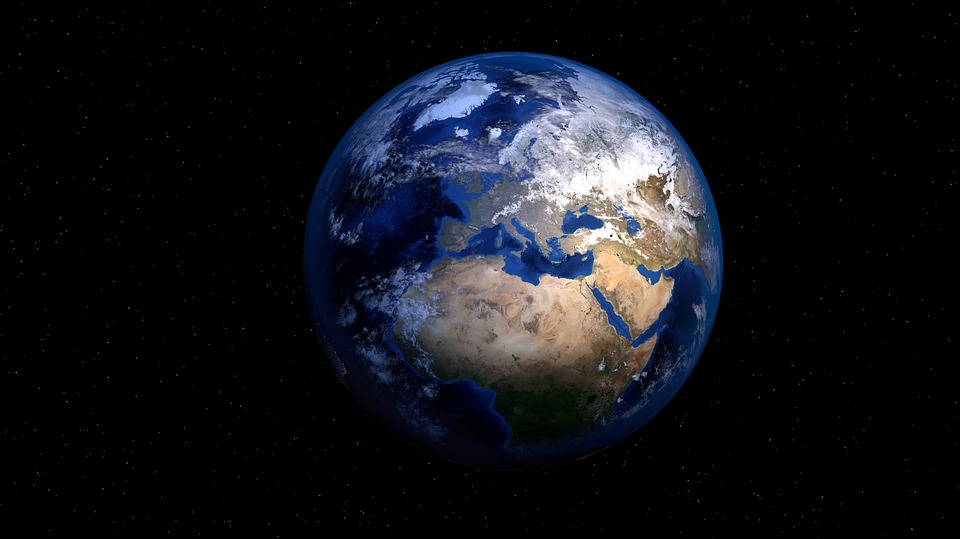
There have been many theories regarding the supposed end of the world. A group of scientists recently predicted that the end of the world could be caused by the planet leaving its orbit.
Researchers from Sharif University have computed the chances of a wandering star that could push the Earth out of its orbit. According to the scientists, should this scenario arise, chaos would ensue and all life would end on Earth. They found that the chances of this scenario are one in 15,000, which is very slim, but not impossible. From another vantage point, because as these wandering stars move within the galaxy, the closer they are to the Sun, the more crowded it would get and the more crowded, the chances of a planet being pushed away by these types of stars is 160 times higher.
According to astrophysicist Paul Stutter of SUNY Stony Brook and the Flatiron Insitute, for a rogue star to be able to push the Earth out of its orbit and away from its place close to the Sun, it would have to pass through Jupiter’s orbit first. Stutter also revealed that the chaos that could happen would greatly depend on how fast the star is traveling. If the star is moving very fast, then the Earth would be safe, most especially if the star is “in a hurry” because there would not be any time to mess anything up on a gravitational level.
It is the stars that move slowly that can cause trouble. “They only have to skirt the edges of the Solar System to cause carnage,” said Stutter. Other factors that could affect the chances of the planet getting pushed out of its orbit also depends on the star’s mass and angle.
Previously, US space agency NASA made a discovery regarding Jupiter. As Jupiter is known as a gas giant, it is also believed to have a very dry atmosphere, based on the first time the agency took a closer look at Jupiter back in 1995. The agency’s Juno cam revealed that Jupiter’s atmosphere has 0.25 percent of water. With this finding, it sheds more light on how the Solar System was formed. Jupiter may have been the first planet to form, followed by the eight others.







