


 NASA and Roscosmos Chiefs Meet in Florida to Discuss Moon and ISS Cooperation
  Samsung Q3 Profit Hits Record High on AI Memory Demand
  OpenAI Annualized Revenue Hits $50 Billion, Below Earlier Estimates
  Bumble Shares Surge 50% on $1 Billion Buyout Talks
  SpaceX Delays Starship V3 Launch Ahead of Potential Record IPO
  Moonshot AI Executives Seek Settlement Ahead of Hong Kong IPO
  Trump Administration Releases New UFO Files and Apollo Mission Records
  Blue Origin New Glenn Explosion Could Delay Launch Operations Until 2028
  Apple Supplier Luxshare Sees Limited Impact From US Patent Probe
  Trump Administration to Launch Autism Initiatives Targeting Acetaminophen Use and New Treatment Options
  Apple Names Steve Smith M&A Chief in Leadership Shakeup
  Jameson Lopp Downplays AI Threat to Bitcoin Cryptography
  Hong Kong’s Second Solana ETF Launches With Lower Fees
  Eli Lilly’s Inluriyo Gains FDA Approval for Advanced Breast Cancer Treatment


 Add as a preferred source on Google
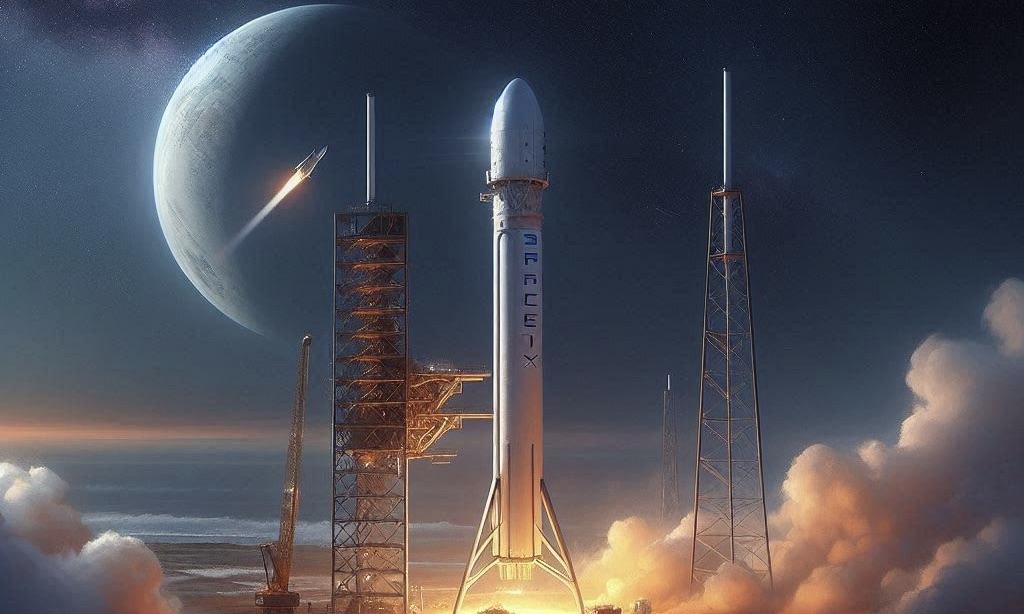
SpaceX has successfully recovered the Super Heavy booster from Starship Flight 4, marking the first retrieval of the rocket post-launch. The company is now preparing for Starship Flight 5, where it will attempt a milestone booster catch using the launch tower’s catch arms.
SpaceX Awaits FAA Approval for Starship Flight 5, Set to Attempt First Booster Tower Catch
According to an image shared by Elon Musk, SpaceX has successfully recovered rocket components from the ocean after the recovery ships were observed near the splashdown zone of the Super Heavy booster from the fourth Starship test flight. SpaceX is anticipating FAA approval for the fifth Starship test flight, which could occur as early as November, per Wccftech.
Starship Flight 5 will be the first to attempt to capture the booster using the catch arms of the launch tower, a significant milestone in SpaceX's ongoing endeavors to enhance booster recovery. It is especially noteworthy that SpaceX recovered the Flight 4 booster during its testing phase, marking the first time the rocket has been retrieved post-launch.
Observers observed that SpaceX's recovery ships had positioned themselves near the splashdown zone for the Flight 4 booster last week. Throughout the Starship test flights, the booster recovery process has steadily improved. The initial integrated flight concluded with the booster's destruction in mid-air, while the subsequent flight experienced an explosion during the boost-back fire. The third flight made further progress but could not complete the boost-back fire, destroying the booster near the ocean's surface. Nevertheless, Flight 4 was the first mission to witness a successful booster splashdown, even though SpaceX did not initially intend to recover the enormous 232-foot rocket from the ocean floor.
SpaceX Prepares for Starship Flight 5, Focusing on Booster Recovery and Tower Catch Milestone
SpaceX has shifted its concentration to preparing the fifth and sixth test flights since the launch of Starship Flight 4 in June. Last week, SpaceX mounted the Flight 5 ship on the booster, indicating that pre-launch preparations are continuing.
Musk's image depicts the outer ring of the Raptor engines in the Super Heavy booster; however, it is uncertain whether the entire rocket was recovered. The Raptor engines are among the most sophisticated in the world, and their sensitive design is safeguarded by export control laws, which restrict the photography of their interiors.
A fan hypothesis circulated on social media following Flight 4 posited that the booster exploded after tipping over post-splashdown. In Musk's image, the Raptor engine nozzles are clogged with debris, and the outer engine ring appears to have been meticulously cut for recovery. SpaceX's booster retrieval will likely be a precursor to future flights, such as the forthcoming tower catch attempt during Flight 5.
Flight 5 will also see the interstage ring being scrapped at a different location, in addition to the tower capture, although the reason for this action is still unknown. SpaceX will endeavor to retrieve the booster; however, it will delay its attempt until the Starship second stage has completed additional successful gentle splashdowns before returning it to the launch site.







